Overview
Fanny and Alexander (Swedish: Fanny och Alexander) is a 1982 period drama film written and directed by Ingmar Bergman. The plot focuses on two siblings and their large family in Uppsala, Sweden during the first decade of the twentieth century. Following the death of the children's father (Allan Edwall), their mother (Ewa Fröling) remarries a prominent bishop (Jan Malmsjö) who becomes abusive towards Alexander for his vivid imagination. Bergman intended Fanny and Alexander to be his final picture before retiring, and his script is semi-autobiographical. The characters Alexander, Fanny and stepfather Edvard are based on himself, his sister Margareta and his father Erik Bergman, respectively. Many of the scenes were filmed on location in Uppsala. The documentary film The Making of Fanny and Alexander was made simultaneously with the feature and chronicles its production. The production was originally conceived as a television miniseries and cut in that version, spanning 312 minutes. A 188-minute cut version was created later for cinematic release, although this version was in fact the one to be released first. The television version has since been released as a complete film, and both versions have been shown in theaters throughout the world. The 312-minute cut is one of the longest cinematic films in history. The theatrical version was released to universal critical acclaim. It won four Academy Awards, including for Best Foreign Language Film; three Guldbagge Awards, including Best Film; and other honours. Fanny and Alexander was followed by stage adaptations and further semi-autobiographical screenplays by Bergman, released as films in 1992: The Best Intentions, directed by Bille August, and Sunday's Children, directed by Daniel Bergman. On both review websites Rotten Tomatoes and Metacritic it is the highest-rated film of the 1980s, and has since then been regarded as one of Bergman's finest works, one of the greatest works of Swedish cinema, and of all time.
From Wikipedia contributors · CC BY-SACast & filmmakers
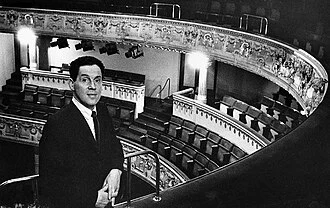
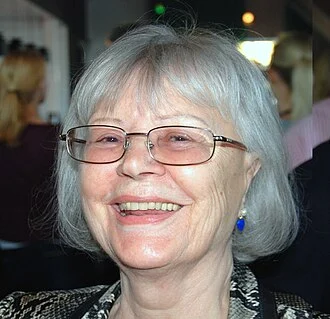
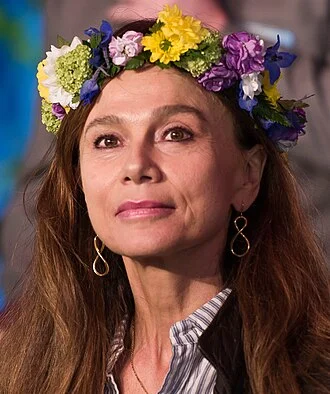
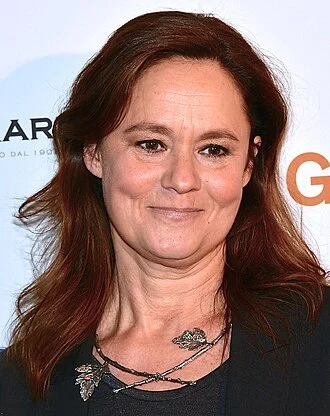
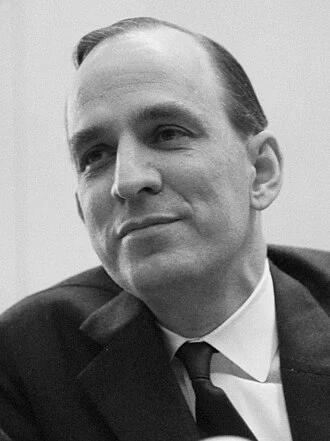
Behind the film
Storyline (spoilers)
In 1907, young Alexander, his sister Fanny, and their well-to-do family, the Ekdahls, live in a Swedish town, running a moderately profitable theatre. At Christmastime, the Ekdahls hold a Nativity play and later a large lively Christmas party. The siblings' parents, Emilie and Oscar, are happily married, with Oscar managing the theatre on behalf of the matriarch, Helena Ekdahl. Helena, a widow, reminisces humorously with long-time family friend, Isak Jacobi, about the time her husband caught them in flagrante delicto in an embrace, fondly remembering how their friendships endured. The siblings' womanizing uncle, Gustav Adolf, carries on with the nursemaid, Maj, with the forbearance of his wife, Alma, who jokes with the women in the family about her husband’s latest fling. The siblings' other uncle, Carl, privately bemoans himself humorlessly as a failure to his tolerant wife, Lydia.
Development
Director Ingmar Bergman conceived of Fanny and Alexander while working on his 1980 film From the Life of the Marionettes, and wrote the screenplay at Fårö in summer 1979. Bergman intended Fanny and Alexander to be his last feature film, but he wrote several screenplays afterwards and directed for television. He told the press he decided to retire, because, "I don't have the strength any more, neither psychologically nor physically". Edvard is based on Erik, and like Edvard, Erik was raised in a family almost completely made up of women. Erik and Ingmar also often conflicted over "truth" and honesty, much as Edvard and Alexander do. The story Alexander tells of being sold to a circus resembles one Ingmar had told as a boy, and he was accosted by Erik much as Edvard lectures Alexander. However, Bergman also stated that "It has been suggested ... that 12-year-old Alexander is my alter-ego. But this is not quite true.
Filming
250px|thumb|Upplandsmuseet was used as a location.
Box office
There were large audiences in Sweden at showings of Fanny and Alexander, including at the five-hour cut, making it the most popular box-office film Bergman had in his native country. It had 374,208 admissions in France and 165,146 in Germany. This amounted to minimal presence in the French box-office.
Awards
The film received six Academy Award nominations, winning four, including Best Foreign Language Film. It also received the third highest number of nominations of 1984, after Terms of Endearment and The Right Stuff (both released in 1983). The four wins was the most any foreign-language film had received at the Academy Awards to date until it tied the record with Crouching Tiger, Hidden Dragon (2000), Parasite (2019) and All Quiet on the Western Front (2022). Fanny and Alexander marked the third and final time Bergman won Best Foreign Language Film, after The Virgin Spring (1960) and Through a Glass Darkly (1961). Bergman did not personally attend the ceremony, while working on a stage production in Munich, so his award was accepted by his wife Ingrid von Rosen and Jörn Donner. The film won the FIPRESCI Prize at 1983 Venice Film Festival. It also won the French Syndicate of Cinema Critics Award for Best Foreign Film.
Original title · Fanny och Alexander
Directed by
Written by
Cast
Title details
- Release year
- 1982
- Runtime
- 188 min
- Content rating
- R
- Genres
- Drama
- Language
- Swedish
- Country of origin
- Germany, France, Sweden