Overview
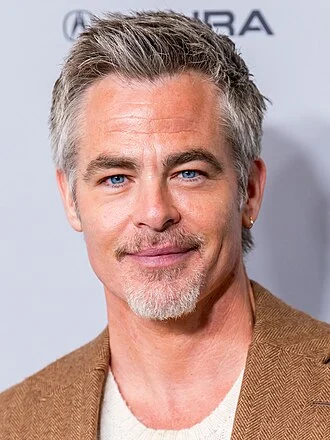
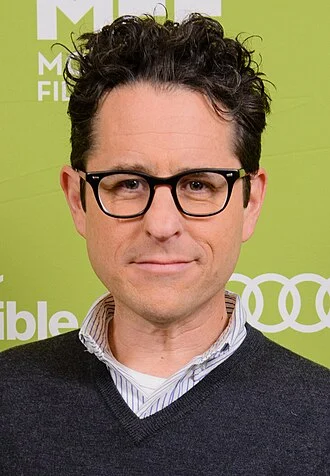
Star Trek is a 2009 American science fiction action film directed by J. J. Abrams and written by Roberto Orci and Alex Kurtzman. It is the 11th film in the Star Trek franchise, and is a reboot that features the main characters of the original Star Trek television series portrayed by a new cast. The film follows James T. Kirk (Chris Pine) and Spock (Zachary Quinto) aboard the USS Enterprise as they combat Nero (Eric Bana), a Romulan from their future who threatens the United Federation of Planets. The story takes place in an alternate reality that features both an alternate birth location for James T. Kirk and further alterations in history stemming from the time travel of both Nero and the original series Spock (Leonard Nimoy). The alternate reality was created in an attempt to free the film and the franchise from established continuity constraints while simultaneously preserving original story elements.
From Wikipedia contributors · CC BY-SACast & filmmakers





















Film poster
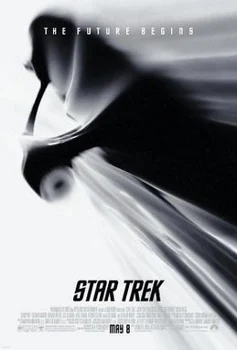
The dark curve of the spacecraft slices through a nearly white field. Motion-blurred edges leave its silhouette more recognizable than its details.
Poster source · Vybpedia article · Film publicity artworkBehind the film
Storyline (spoilers)
In 2233, the Federation starship USS Kelvin investigates a "lightning storm" in space. A Romulan ship, Narada, emerges from the storm and attacks the Kelvin, then demands that Kelvins Captain Robau come aboard to negotiate a truce. Robau is questioned about the current stardate and an "Ambassador Spock", whom he does not recognize. Naradas commander, Nero, kills him, and resumes attacking the Kelvin. George Kirk, Kelvins first officer, orders the ship's personnel, including his pregnant wife Winona, to abandon ship while he pilots the Kelvin on a collision course with Narada, since the Kelvin's autopilot is disabled. While Kirk sacrifices his life, Winona gives birth to James Tiberius Kirk.
Development
As early as the 1968 World Science Fiction Convention, Star Trek creator Gene Roddenberry had said he was going to make a film prequel to the television series. However, the prequel concept did not resurface until the late 1980s, when Ralph Winter and Harve Bennett submitted a proposal for a prequel during development of the fourth film. Roddenberry rejected Bennett's prequel proposal in 1991, after the completion of Star Trek V: The Final Frontier. Then David Loughery wrote a script entitled The Academy Years, but it was shelved in light of objections from Roddenberry and the fanbase. The film that was commissioned instead ended up being Star Trek VI: The Undiscovered Country.
Filming
Principal photography for the film began on November 7, 2007, and culminated on March 27, 2008; however second unit filming occurred in Bakersfield, California, in April 2008, which stood in for Kirk's childhood home in Iowa. Filming was also done at the City Hall of Long Beach, California; the San Rafael Swell in Utah; and the California State University, Northridge in Los Angeles (which was used for establishing shots of students at Starfleet Academy). A parking lot outside Dodger Stadium was used for the ice planet of Delta Vega and the Romulan drilling rig on Vulcan. The filmmakers expressed an interest in Iceland for scenes on Delta Vega, but decided against it: Chambliss enjoyed the challenge of filming scenes with snow in southern California. Other Vulcan exteriors were shot at Vasquez Rocks, a location that was used in various episodes of the original series.
Visual effects
Industrial Light & Magic and Digital Domain were among several companies that created over 1,000 special effect shots. Enterprise was intended by Abrams to be a merging of its design in the series and the refitted version from the original film. Abrams had fond memories of the revelation of Enterprises refit in Star Trek: The Motion Picture, because it was the first time the ship felt tangible and real to him. The iridescent pattern on the ship from The Motion Picture was maintained to give the ship depth, while model maker Roger Goodson also applied the "Aztec" pattern from The Next Generation. Goodson recalled Abrams also wanted to bring a "hot rod" aesthetic to the ship. Effects supervisor Roger Guyett wanted the ship to have more moving parts, which stemmed from his childhood dissatisfaction with the ship's design: The new Enterprises dish can expand and move, while the fins on its engines split slightly when they begin warping.
Box office
Official screenings in the United States started at 7 pm on May 7, 2009, grossing $4 million on its opening day. By the end of the weekend, Star Trek had opened with $79,204,300, as well as $35,500,000 from other countries. Adjusted and unadjusted for inflation, it beat Star Trek: First Contact for the largest American opening for a Star Trek film. The film made US$8.5 million from its IMAX screenings, breaking The Dark Knights $6.3 million IMAX opening record. The film is the highest-grossing in the United States and Canada from the entire Star Trek film franchise, eclipsing The Voyage Home and Star Trek: The Motion Picture. Its opening weekend numbers alone outgross the entire individual runs of The Undiscovered Country, The Final Frontier, Insurrection and Nemesis.
Awards
The film garnered numerous accolades after its release. In 2010, it was nominated for four Academy Awards at the 82nd Academy Awards, for Best Sound Editing, Best Sound, Best Visual Effects, and Best Makeup. Star Trek won in the category for Best Makeup, making it the first Star Trek film to receive an Academy Award. The film was nominated for three Empire Awards, to which it won for Best Sci-Fi/Fantasy. In October 2009, Star Trek won the Hollywood Award for Best Movie, and attained six Scream Awards at the 2009 Scream Awards Ceremony. The film attained a Screen Actors Guild Award for Outstanding Performance by a Stunt Ensemble in a Motion Picture at the 16th Screen Actors Guild Awards.
Directed by
Written by
Cast
Title details
- Release year
- 2009
- Release date
- 2009-04-06
- Runtime
- 127 min
- Film series
- Star Trek
- Based on
- Star Trek: The Original Series
- Production companies
- Bad Robot Productions, Paramount Pictures, Spyglass Media Group
- Distributors
- Netflix, Paramount Pictures, UIP-Dunafilm, YouTube
- Content rating
- PG-13
- Genres
- Reboot, Science Fiction, Action, Adventure
- Language
- English
- Country of origin
- United States of America, Germany
- Title in Brazil
- Star Trek
- Brazil theatrical release
- 2009-05-08
- Brazilian film certificate
- E1402648600000
- Distributor in Brazil
- Paramount
Awards and nominations
Awards received (6)
- Academy Award for Best Makeup and Hairstyling
- Boston Society of Film Critics Award for Best Cast
- Las Vegas Film Critics Society Award for Best Score
- National Board of Review: Top Ten Films
- Saturn Award for Best Make-up
- Screen Actors Guild Award for Outstanding Performance by a Stunt Ensemble in a Motion Picture
Nominations (28)
- Academy Award for Best Makeup and Hairstyling
- Academy Award for Best Sound
- Academy Award for Best Sound Editing
- Academy Award for Best Visual Effects
- BAFTA Award for Best Sound
- BAFTA Award for Best Special Visual Effects
- Boston Society of Film Critics Award for Best Cast
- Broadcast Film Critics Association Award for Best Action Film
- Broadcast Film Critics Association Award for Best Cast
- Broadcast Film Critics Association Award for Best Makeup
- Broadcast Film Critics Association Award for Best Sound
- Broadcast Film Critics Association Award for Best Visual Effects
- Costume Designers Guild Award for Excellence in Fantasy Costume Design for Film
- Grammy Award for Best Score Soundtrack for Visual Media
- Hugo Award for Best Dramatic Presentation, Long Form
- Las Vegas Film Critics Society Award for Best Score
- MTV Movie Award for Best Breakthrough Performance
- Producers Guild of America Award for Best Theatrical Motion Picture
- Satellite Award for Best Visual Effects
- Saturn Award for Best Make-up
- Saturn Award for Best Science Fiction Film
- Saturn Award for Best Special Effects
- Saturn Award for Best Writing
- Screen Actors Guild Award for Outstanding Performance by a Stunt Ensemble in a Motion Picture
- Teen Choice Award for Best Villain
- Visual Effects Society Award for Outstanding Visual Effects in an Effects Driven Feature Motion Picture
- World Soundtrack Award for Soundtrack Composer of the Year
- Writers Guild of America Award for Best Adapted Screenplay