Overview
The Wild Child (French: L'Enfant sauvage, released in the United Kingdom as The Wild Boy) is a 1970 French historical drama film co-written, directed by, and starring François Truffaut. It is based on the true events regarding Victor of Aveyron (Jean-Pierre Cargol), a late 18th-century French child who spent the first eleven or twelve years of his life with little or no human contact. The film was released in France on February 26, 1970. It was a critical and commercial success, earning Truffaut several accolades including the Prix Méliès and the National Board of Review Award for Best Director. The film also won the National Society of Film Critics Award for Best Cinematography (for Néstor Almendros).
From Wikipedia contributors · CC BY-SACast & filmmakers
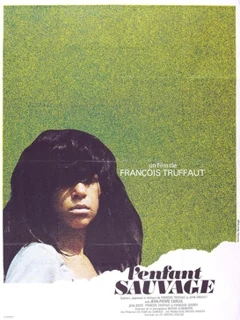
Film poster
The child's dark hair makes a stark outline against the flat green field.
Poster source · Vybpedia article · Film publicity artworkBehind the film
Storyline (spoilers)
One summer day in 1798, a naked boy of 11 or 12 years of age is found in a forest in the rural district of Aveyron in southern France. A woman sees him, then runs off screaming. She finds some hunters and tells them that she saw a wild boy. They hunt him down with a pack of dogs who chase him up a tree and attack him when he falls. He fights them off leaving one dog wounded, then continues to flee and hides in a hole. The dogs continue to follow his scent, eventually finding his hiding place. The hunters arrive and force him out of the hole using smoke to cut off his air supply. After he emerges, the men grab him.
Development
Truffaut had always felt a strong connection to children, especially outcasts and young people who reject the traditions of society, and frequently used this theme in films such as The 400 Blows and Small Change. In 1962, Truffaut had wanted to make a film based on the play The Miracle Worker; however, Arthur Penn had already obtained the rights and made a film later that year. In 1966, Truffaut read an article in Le Monde by Lucien Malson about feral children, with short examples of 52 such children from 1344 to 1968. Truffaut was especially interested in the story of Victor of Aveyron, The Wild Boy of Aveyron, and began to research the story. The film's script is based upon two reports written by Dr. Itard: one written to the Academy of medicine in 1801 and one written to the French Minister of the Interior in 1806 requesting that the Ministry continue funding Victor's guardian Madame Guérin.
Filming
Filming took place on location in Aveyron, France, from July to August 1969, so as not to interrupt Cargol's education. It was Truffaut's first film with cinematographer Néstor Almendros, who went on to work with Truffaut on eight more films. The film included several references to the aesthetics of silent films, such as using an iris shutter to end scenes and filming it in black and white. Truffaut directed first-time actor Cargol by instructing him to pretend to be different animals or people during specific scenes, such as "be like a dog", or "like a horse", or even "like Harpo Marx." During the shoot, Cargol was given a 8mm camera and stated that he would become "the first gypsy director", however Cargol only appeared as an actor in one more film. Truffaut later said that during the making of the film he "saw that the cinema helped his evolution.
Original title · L'Enfant sauvage
Directed by
Written by
Cast
Title details
- Release year
- 1970
- Runtime
- 83 min
- Production companies
- Les Films du Carrosse
- Distributors
- Netflix, United Artists
- Content rating
- G
- Genres
- Drama
- Language
- French
- Country of origin
- France