Overview
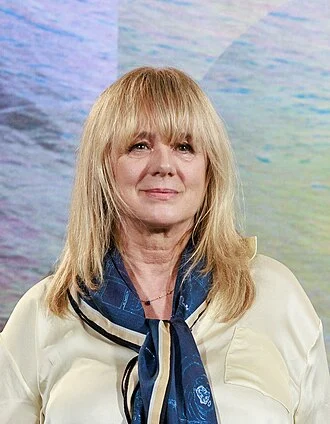
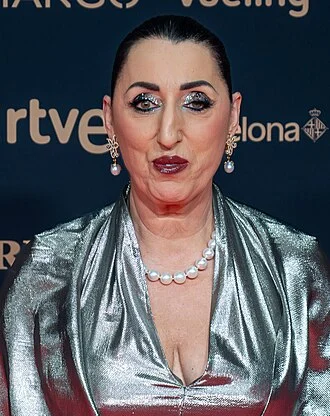
Julieta (Spanish pronunciation: [xuˈljeta]), originally titled Silencio, is a 2016 Spanish melodrama film written and directed by Pedro Almodóvar. It is based on "Chance", "Silence", and "Soon", three short stories by Alice Munro from her 2004 collection Runaway. It is Almodóvar's 20th feature, and stars Emma Suárez and Adriana Ugarte as old and young Julieta, alongside Daniel Grao, Inma Cuesta, Darío Grandinetti, Michelle Jenner, and Rossy de Palma. The film was released theatrically in Spain on 8 April 2016 by Warner Bros. Pictures to generally positive reviews. It made its international debut at the 2016 Cannes Film Festival, where it was selected to compete for the Palme d'Or, and was released across the world throughout the remainder of 2016. Julieta grossed over $22 million worldwide. It was selected by the Academia de las Artes y las Ciencias Cinematográficas de España as the Spanish entry for the Best Foreign Language Film at the 89th Academy Awards, but did not make the shortlist. It was nominated for the BAFTA Award for Best Film Not in the English Language, in addition to receiving four nominations for European Film Awards and seven nominations for Goya Awards.
From Wikipedia contributors · CC BY-SACast & filmmakers
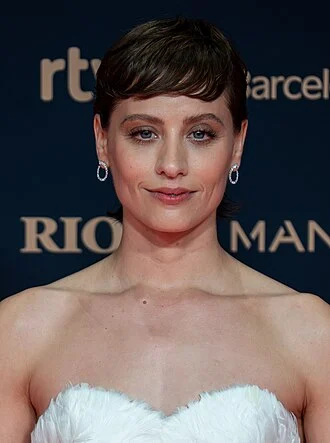
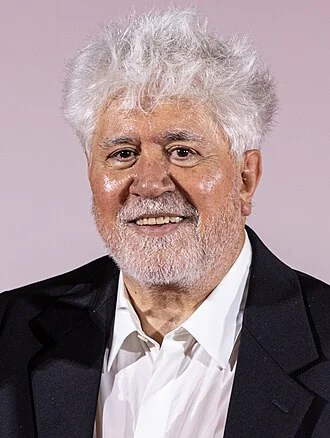
Behind the film
Storyline (spoilers)
Julieta lives in Madrid and is about to move to Portugal with her boyfriend Lorenzo. In a chance encounter on the street with her daughter Antía's childhood friend Beatriz, she learns that Antía, from whom she has long been estranged, is living in Switzerland and has three children. Overcome by her desire to re-establish contact with Antía, she abandons plans to leave Spain and instead leases an apartment elsewhere in the building in Madrid where she had raised Antía, knowing that address is Antía's only means of contacting her.
Development
Julieta marked Almodóvar's 20th feature film. The film was inspired by Chance, Silence and Soon, three short stories from the 2004 book Runaway by Nobel laureate Alice Munro, from whom Almodóvar bought the film rights in 2009. He later said he specifically asked for the rights due to the pivotal scenes that take place on a train: "There is something incredibly passionate about them", he said. "A woman, on a train, and it's very cinematographic". The director admitted that he had not been completely faithful to the source material, but noted the significance of Munro's depiction of family relationships and the links between women, which he believed to be an important part of his adaptation. It is Almodóvar's third film to be based on a foreign-language text, following Live Flesh (1997) and The Skin I Live In (2011).
Filming
On working with the pair, Almodóvar said: "I battled a lot with the actresses' tears, against the physical need to cry. It is a very expressive battle. It wasn't out of reservedness, but because I didn't want tears, what I wanted was dejection – the thing that stays inside after years and years of pain. I adore melodrama, it's a noble genre, a truly great genre, but I was very clear that I didn't want anything epic, I wanted something else. Simply put, this had to be a very dry, tearless film". In an interview with the BBC, Almodóvar said there were comic situations in rehearsals, but he wanted to set the humour aside: "I wanted something more intense; I wanted something cleaner to make sure the message got through". with Jean-Claude Larrieu as cinematographer and frequent collaborator Alberto Iglesias composing the film's score. Sonia Grande, another frequent collaborator, was responsible for the film's costume design.
Box office
In Spain, the film opened in 203 cinemas. Over its opening weekend, it attracted 79,523 spectators, making €585,989. This was reportedly Almodóvar's worst opening at the Spanish box office in 20 years. Agustín Almodóvar later admitted that the film being a drama and not a comedy, made it harder to sell to a mainstream audience, coupled with the Panama Papers scandal which provoked Almodóvar to halt all press engagements in the run up to Julietas release were the two main factors in the disappointing box office results. In its first week, Julieta made €1,180,017 in Spain, making it the fifth-highest grossing film of the week, but was overshadowed by films like The Jungle Book and . It stayed at number 5 the following week, but the film's earnings dropped by 43%, making €348,515.
Awards
Before its release, the Los Angeles Times predicted that the film could be an Academy Award contender. In September 2016, the Spanish Academy selected Julieta as the Spanish entry for the Best Foreign Language Film at the 89th Academy Awards. In December 2016, Julieta was eliminated from the competition and did not make the shortlist.
Directed by
Written by
Cast
Title details
- Release year
- 2016
- Runtime
- 99 min
- Genres
- Drama
- Language
- Spanish
- Country of origin
- Spain
- France theatrical release
- 2016-05-18
- French theatrical visa
- 143541
- Classification in France
- Tous publics
- Title in Brazil
- Julieta
- Brazil theatrical release
- 2016-07-07
- Brazilian film certificate
- E1600356700000
- Distributor in Brazil
- Universal