Overview
The Passenger (Italian: Professione: reporter) is a 1975 thriller film directed by Michelangelo Antonioni. Written by Antonioni, Mark Peploe, and Peter Wollen, the film is about a disillusioned Anglo-American journalist, David Locke (Jack Nicholson), who assumes the identity of a dead businessman while working on a documentary in Chad, unaware that he is impersonating an arms dealer with connections to the rebels in the civil war. Along the way, he is accompanied by an unnamed young woman (Maria Schneider). The Passenger was the final film in Antonioni's three-picture deal with producer Carlo Ponti and Metro-Goldwyn-Mayer, after Blowup (1966) and Zabriskie Point (1970). The film received strong reviews, with critics praising Antonioni's direction, Nicholson's performance, the cinematography, and its themes of identity, disillusionment and existentialism. During the film's release, it was in competition for the Palme d'Or at the Cannes Film Festival. The film was released by MGM through United Artists in the United States, but in partial settlement of a dispute over a different project, Nicholson received the film rights and reportedly kept it out of video distribution until Sony Pictures offered to remaster and re-release it. In 2005, with Nicholson's consent, Sony Pictures Classics remastered the film, giving it a limited theatrical re-release on 28 October 2005, and releasing it on DVD on 25 April 2006.
From Wikipedia contributors · CC BY-SACast & filmmakers
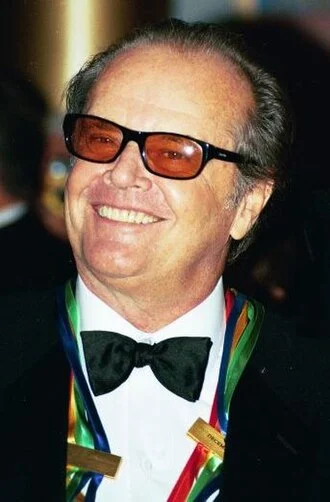
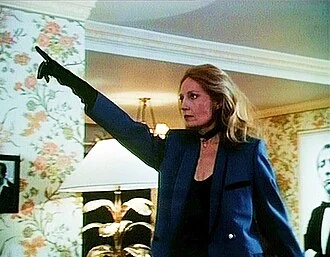
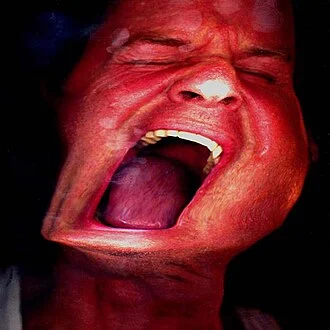
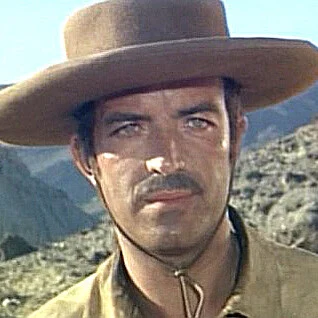
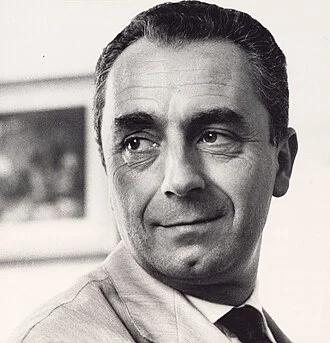
Cast and characters
- Ambroise Bia
- Achebe
- James Campbell
- the Witch Doctor
- Jean-Baptiste Tiemele
- Murderer
- Charles Mulvehill
- Robertson
Film poster
Three profiles overlap on an otherwise almost empty page. The travel-tag lettering beneath them makes the faces feel like interchangeable identities.
Poster source · Vybpedia article · Film publicity artworkBehind the film
Storyline (spoilers)
David Locke is a disaffected television journalist in northern Chad, looking to interview rebel fighters who are involved in the civil war. Struggling to find interviewees, he is further frustrated when his Land Rover gets stuck in a sand dune after being abandoned there by guides. After a long walk through the Sahara back to his hotel, an exhausted Locke discovers that a fellow guest (Robertson), an Englishman with whom he had struck up a casual friendship, died in his room of a heart attack that same night. Locke decides to switch identities with Robertson, whom he greatly resembled, and reports his own death at the front desk, the plan going off without a hitch. Locke collects Robertson's belongings, which include a pistol, an appointment book and passport. He alters the passport to carry his own photo.
Development
During the 1960s, Michelangelo Antonioni had signed a three-picture deal with producer Carlo Ponti and Metro-Goldwyn-Mayer. His first two films were Blowup (1966) and Zabriskie Point (1970). His third project was tentatively titled Technically Sweet, which was inspired by the 1958 short story titled "L'avventura di un fotografo" (translated to "The Adventure of a Photographer") by Italo Calvino. The title had been inspired by J. Robert Oppenheimer's remark on the atomic bomb because of the "technically sweet" (mathematical beauty, mathematical elegance) theoretical problems it created. Antonioni first wrote a film treatment in 1966, and later wrote a script in collaboration with Mark Peploe, Niccolò Tucci, and Tonino Guerra. After Zabriskie Point (1970) was released, Antonioni spent two years on pre-production work, including location scouting near the Amazon River.
Filming
Principal photography took place in Tassili N'Ajjer, the Illizi Province of Algeria London, , and locations across south-eastern Spain (Almería,
Original title · Professione: reporter
Directed by
Written by
Cast
Title details
- Release year
- 1975
- Runtime
- 126 min
- Production companies
- Metro-Goldwyn-Mayer
- Distributors
- United Artists
- Content rating
- PG-13
- Genres
- Thriller, Drama, Psychological thriller, World cinema
- Language
- English, German, Spanish
- Country of origin
- France, Spain, Italy, United States of America
- France theatrical release
- 1975-06-14
- French theatrical visa
- 45090
- Classification in France
- Tous publics
Awards and nominations
Awards received (1)
- National Board of Review: Top Ten Films