Overview
Sholay (Hindustani: [ˈɕoːleː] , transl. 'Embers') is a 1975 Indian Hindi-language action-adventure film directed by Ramesh Sippy, produced by his father G. P. Sippy, and written by Salim–Javed. The film follows two criminals, Veeru (Dharmendra) and Jai (Amitabh Bachchan), who are hired by a retired police officer (Sanjeev Kumar) to capture the ruthless bandit Gabbar Singh (Amjad Khan). Hema Malini and Jaya Bhaduri also star as Veeru and Jai's love interests, Basanti and Radha, respectively. The soundtrack was composed by R. D. Burman. Filming took place in the rocky terrain of Ramanagara, in the southern state of Karnataka, over two and a half years, beginning in October 1973. After the Central Board of Film Certification mandated the removal of several violent scenes, Sholay was released theatrically as a 198-minute long film. The first version of the director's cut (running at 204 minutes) became available on home media in 1990. In 2025, the fully restored Director's Cut was released worldwide as Sholay: The Final Cut. Sholay is a Dacoit Western (sometimes called a "Curry Western"), combining the conventions of Indian dacoit films with those of Spaghetti Westerns along with elements of Samurai cinema. Sholay was theatrically released on 15 August 1975. It received negative critical reviews and a tepid commercial response during its initial release. However, favourable word-of-mouth publicity helped it to become a box office success. It then went on to break records for continuous showings in many theatres across India, and ran for more than five years at Mumbai's Minerva theatre. The combined sales of the original soundtrack, scored by R. D. Burman, and the dialogues (released separately), set new records at the time. It was also an overseas success in the Soviet Union. Sholay was also at one point the highest-grossing Indian film ever at the time, and was the highest-grossing film in India up until Hum Aapke Hain Koun..! (1994). Sholay is often regarded as one of the greatest and most influential Indian films of all time. It was ranked first in the British Film Institute's 2002 poll of "Top 10 Indian Films" of all time. In 2005, the judges of the 50th Filmfare Awards named it the Best Film of 50 Years. Sholay was also a defining example of the masala film, which mixes several genres in one work. Scholars have noted several themes in the film, such as glorification of violence, conformation to Indian feudalism, debate between social order and mobilised usurpers, homosocial bonding, and the film's role as a national allegory. The film's dialogue contributed to numerous cultural memes and becoming part of India's daily vernacular partly due to the release of a Polydor Records dialogue-only LP.
From Wikipedia contributors · CC BY-SACast & filmmakers
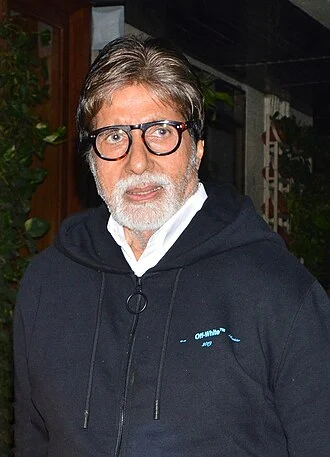
Behind the film
Development
The screenwriter pair Salim–Javed, consisting of Salim Khan and Javed Akhtar, began narrating the idea for Sholay as a four-line snippet to filmmakers in 1973. and has also been compared to a similar scene in North West Frontier (1959). A scene showing the massacre of Thakur's family has been compared with the massacre of the McBain family in Once Upon a Time in the West. Sholay may have also been influenced by Sam Peckinpah's Westerns, such as The Wild Bunch (1969) and Pat Garrett and Billy the Kid (1973), and George Roy Hill's Butch Cassidy and the Sundance Kid (1969).
Filming
Much of Sholay was shot in the rocky terrain of Ramanagara, a town near Bangalore, Karnataka. The filmmakers had to build a road from the Bangalore highway to Ramanagara for convenient access to the sets. Art director Ram Yedekar had an entire township built on the site. A prison set was constructed near Rajkamal Studios in Bombay, also outdoors, to match the natural lighting of the on-location sets. One part of Ramanagara was for a time called "Sippy Nagar" as a tribute to the director of the film. , a visit to the "Sholay rocks" (where much of the film was shot) was still being offered to tourists travelling through Ramanagara.
Box office
Sholay was released on 15 August 1975, Indian Independence Day, in Bombay. Due to lackluster reviews and a lack of effective visual marketing tools, it saw poor financial returns in its first two weeks. From the third week, however, viewership picked up owing to positive word of mouth. During the initial slow period, the director and writer considered re-shooting some scenes so that Amitabh Bachchan's character would not die. When business picked up, they abandoned this idea. After being helped additionally by a soundtrack release containing dialogue snippets, Sholay soon became an "overnight sensation".
Awards
Sholay was nominated for nine Filmfare Awards, and the only winner was M. S. Shinde, who won the award for Best Editing. The film also won three awards at the 1976 Bengal Film Journalists' Association Awards (Hindi section): "Best Actor in Supporting Role" for Amjad Khan, "Best Cinematographer (Colour)" for Dwarka Divecha, and "Best Art Director" for Ram Yedekar. Sholay received a special award at the 50th Filmfare Awards in 2005: Best Film of 50 Years.
Original title · शोले
Directed by
Written by
Cast
Title details
- Release year
- 1975
- Runtime
- 204 min
- Genres
- Adventure, Comedy
- Language
- Hindi
- Country of origin
- India