Overview
Saturday Night Fever is a 1977 American dance drama film directed by John Badham and produced by Robert Stigwood. It stars John Travolta as Tony Manero, a young Italian-American man who spends his weekends dancing and drinking at a local disco while dealing with social tensions and disillusionment in his working class ethnic neighborhood in Brooklyn. The story is based on "Tribal Rites of the New Saturday Night", a mostly fictional 1976 New York article by the music writer Nik Cohn. Released by Paramount Pictures, the film was a major critical and commercial success. Saturday Night Fever had a tremendous impact on the popular culture of the late 1970s. It helped popularize disco music around the world and initiated a series of collaborations between film studios and record labels. It made Travolta, already well known from his role in the popular television sitcom Welcome Back, Kotter, a household name. He was nominated for the Academy Award for Best Actor for his performance, at the time becoming the fourth-youngest nominee in the category. The film showcases aspects of the music, dancing, and subculture surrounding the disco era, including symphony-orchestrated melodies, haute couture styles of clothing, pre-AIDS sexual promiscuity and graceful choreography. The Saturday Night Fever soundtrack, featuring songs by the Bee Gees, is one of the best-selling soundtrack albums worldwide. Travolta reprised his role of Tony Manero for Staying Alive in 1983, which was panned by critics despite box office success. In 2010, Saturday Night Fever was deemed "culturally, historically, or aesthetically significant" by the Library of Congress and selected for preservation in the United States National Film Registry. Adjusted for inflation, it is one of the highest-grossing R-rated films released in the U.S. in the 1970s, with a total box office gross of $673,899,098 in 2024.
From Wikipedia contributors · CC BY-SACast & filmmakers


Cast and characters
- Lisa Peluso
- Linda Manero
- Nina Hansen
- Grandmother
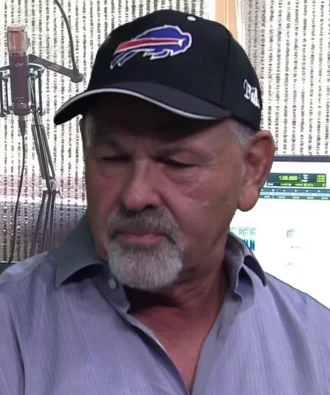
- Sam Coppola
- Dan Fusco
- Denny Dillon
- Doreen
- Bert Michaels
- Pete
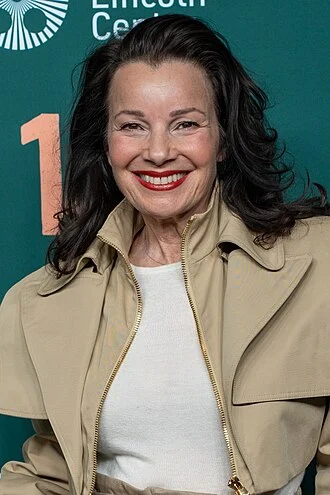
- Fran Drescher
- Connie
- Monti Rock III
- the DJ
- Robert Weil
- Becker
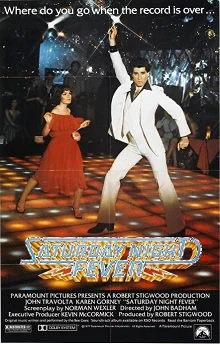
The theatrical poster
A raised arm and a white suit stand out against the dark club. The illuminated squares beneath the dancers give the famous pose its own small stage.
Poster source · Vybpedia article · Theatrical release artworkBehind the film
Storyline (spoilers)
Tony Manero is an Italian-American from the Bay Ridge neighborhood of Brooklyn, living in his family's house and working in a hardware store. He escapes his day-to-day life by dancing at 2001 Odyssey, a local discotheque, where he receives the admiration he craves as king of the dance floor.
Development
The film was inspired by a 1976 New York magazine article entitled "Tribal Rites of the New Saturday Night" by British writer Nik Cohn. The article centers on working class Italian-Americans in Bay Ridge, Brooklyn, and on the lives of young men who work dead-end jobs but live for their nights dancing at the local discotheque. Cohn later wrote that "the [disco] craze had started in black gay clubs, then progressed to straight blacks and gay whites and from there to mass consumption—Latinos in the Bronx, West Indians on Staten Island, and, yes, Italians in Brooklyn." He said that as a newcomer to the United States and a stranger to the disco lifestyle, he was unable to make any sense of the subculture he had been assigned to write about; instead, the article's protagonist (who would become Tony Manero) was based on an acquaintance of Cohn who was an English mod.
Filming
The film was shot entirely on location in Brooklyn, New York. The 2001 Odyssey Disco was a real club located at 802 64th Street, but it has since been demolished. The interior was modified for the film, including the addition of a $15,000 lighted floor, A similar effect was achieved on the club's walls using tin foil and Christmas lights. Since the Bee Gees were not involved in the production until after principal photography had wrapped, the "Night Fever", "You Should Be Dancin'" and "More Than a Woman" sequences were shot with Stevie Wonder tracks that were later overdubbed in the sound mix. and the paint store was Pearson Paint & Hardware, also in Bay Ridge. Other locations included the Verrazzano–Narrows Bridge, John J. Carty Park and the Bay Ridge Promenade.
Box office
The film grossed $25.9 million in its first 24 days of release and grossed an average of $600,000 a day throughout January to March going on to gross $94.2 million in the United States and Canada and $237.1 million worldwide. Adjusted for inflation, it is the highest-grossing R-rated film released in the U.S. in the 1970s, with a total box office gross of $673,899,098 in 2024.
Directed by
Written by
Cast
Title details
- Release year
- 1977
- Release date
- 1977-12-14
- Runtime
- 119 min
- Based on
- Tribal Rites of the New Saturday Night
- Production companies
- RSO Records
- Distributors
- Netflix, Paramount Pictures
- Content rating
- R
- Genres
- Drama, Dance
- Language
- English
- Country of origin
- United States of America
- Netflix reported views
- 200,000 · Saturday Night Fever · 2026 H1
- Title in Brazil
- OS EMBALOS DE SABADO A NOITE
- Brazil theatrical release
- 2014-06-21
- Brazilian film certificate
- E1402513100000
- Distributor in Brazil
- Cinemark Brasil S.A
Awards and nominations
Awards received (1)
- National Board of Review: Top Ten Films
Nominations (1)
- Academy Award for Best Actor
 Trailer still