Overview
Schindler's List is a 1993 American historical drama film directed and co-produced by Steven Spielberg and written by Steven Zaillian. It is based on the historical novel Schindler's Ark (1982) by Thomas Keneally. The film follows Oskar Schindler, a German industrialist who saved more than a thousand mostly Polish–Jewish refugees from the Holocaust by employing them in his factories during World War II. It stars Liam Neeson as Schindler, Ralph Fiennes as SS officer Amon Göth, and Ben Kingsley as Schindler's Jewish accountant Itzhak Stern. Ideas for a film about the Schindlerjuden (Schindler Jews) were proposed as early as 1963. Poldek Pfefferberg, one of the Schindlerjuden, made it his life's mission to tell Schindler's story. Spielberg became interested when executive Sidney Sheinberg sent him a book review of the novel. Universal Pictures bought the rights to the novel, but Spielberg, unsure if he was ready to make a film about the Holocaust, tried to pass the project to several directors before deciding to direct it himself. Principal photography took place in Kraków, Poland, over 72 days in 1993. Spielberg shot the film in black and white and approached the film as a documentary. Cinematographer Janusz Kamiński wanted to create a sense of timelessness. John Williams composed the score, and violinist Itzhak Perlman performed the main theme. Schindler's List premiered on November 30, 1993, in Washington, D.C., and was released on December 15, 1993, in the United States. The film received widespread critical acclaim. It was a box office success, earning $322.2 million worldwide on a $22 million budget. Schindler's List earned multiple accolades, including seven Academy Awards (including Best Picture), seven BAFTAs and three Golden Globes. It is often listed as one of the greatest films ever made. The film was deemed "culturally, historically or aesthetically significant" by the Library of Congress in 2004 and selected for preservation in the U.S. National Film Registry. In 2007, the American Film Institute ranked Schindler's List 8th on its list of the 100 greatest American films.
From Wikipedia contributors · CC BY-SACast & filmmakers
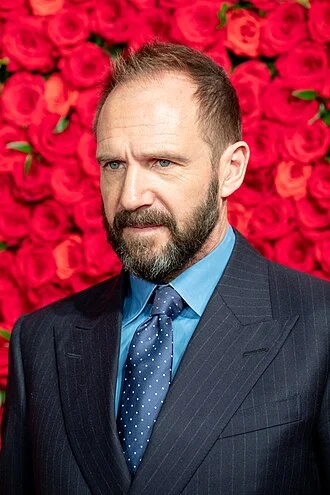
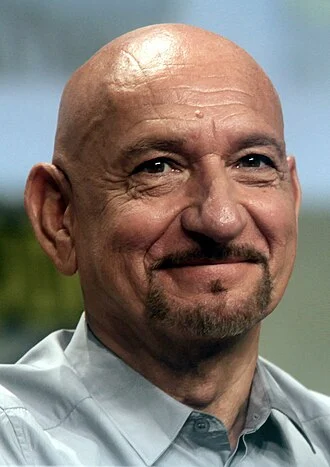
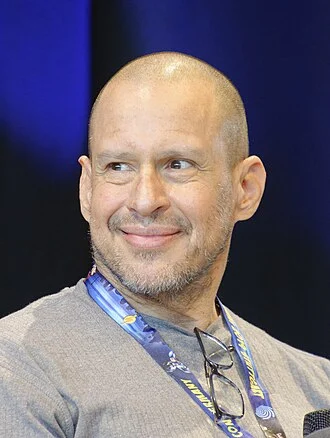
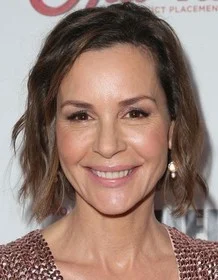
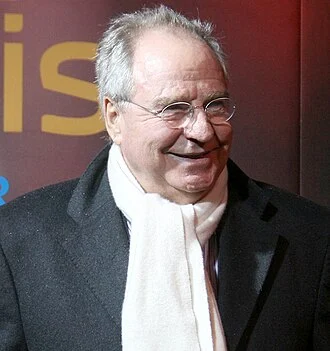
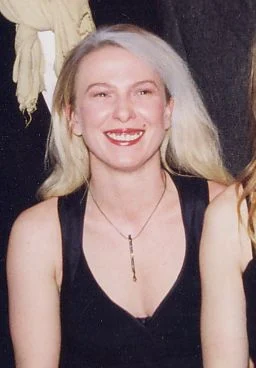
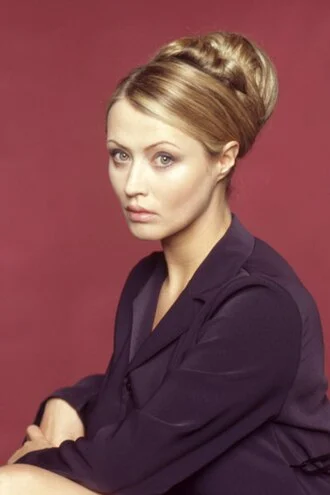
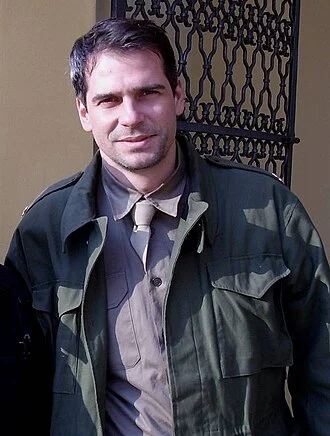


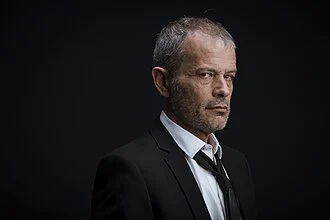
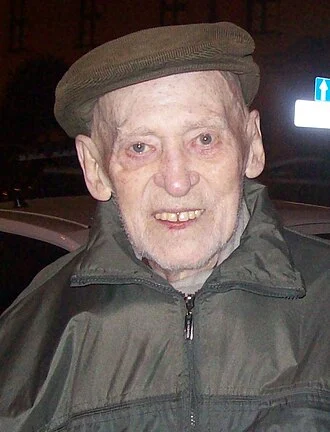
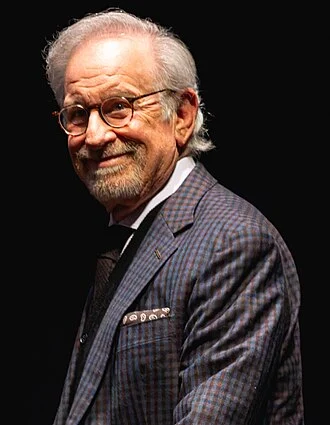
Cast and characters
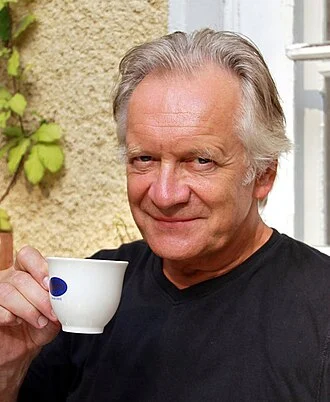
- Adi Nitzan
- Mila Pfefferberg
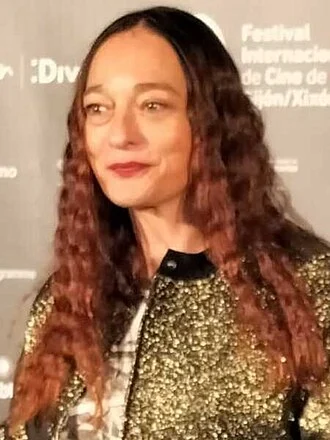
- Ludger Pistor
- Josef Liepold
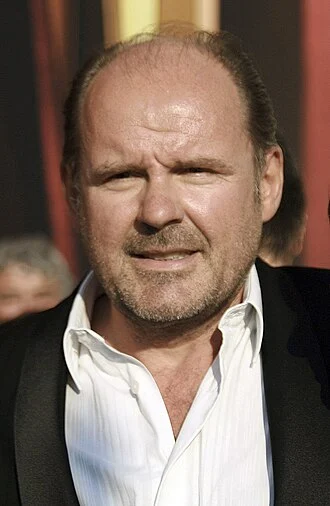
- Miri Fabian
- Chaja Dresner
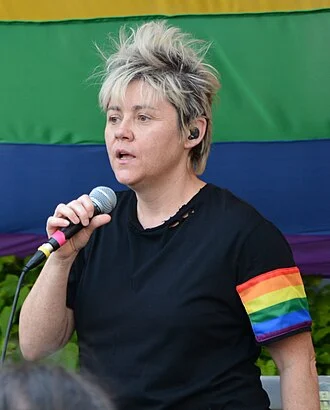
- Ezra Dagan
- Rabbi Menasha Lewartow
- Aldona Grochal
- Mrs. Nussbaum
- Albert Misak
- Mordecai Wulkan
- Beata Paluch
- Manci Rosner
- Anna Mucha
- Danka Dresner
- Malgoscha Gebel
- Wiktoria Klonowska
- Beata Nowak
- Rebecca Tannenbaum
- Krzysztof Luft
- Herman Toffel
- Harry Nehring
- Leo John
- Shmulik Levy
- Wilek Chilowicz
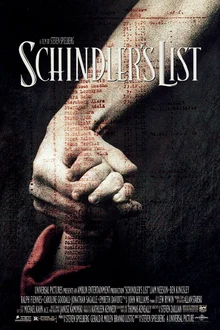
The theatrical poster
One hand closes over another against a black field, with lettering faintly visible across the skin. The absence of faces concentrates attention on the small physical act of holding on.
Poster source · Vybpedia article · Film poster artworkBehind the film
Storyline (spoilers)
In German-occupied Kraków during World War II, the Nazis forced local Polish Jews into the overcrowded Kraków Ghetto. Oskar Schindler, a German Nazi Party member from Czechoslovakia, arrives in the city, hoping to make his fortune. He bribes Wehrmacht (German armed forces) and SS officials, acquiring a factory to produce enamelware. Schindler hires Itzhak Stern, a Jewish official with contacts among black marketeers and the Jewish business community; Stern handles administration and helps Schindler arrange financing. Stern ensures that as many Jewish workers as possible were deemed essential to the German war effort to prevent them from being taken by the SS to concentration camps or killed. Meanwhile, Schindler maintains friendly relations with the Nazis and enjoys his new wealth and status as an industrialist.
Development
Poldek Pfefferberg, one of the Schindlerjuden, made it his life's mission to tell the story of his savior. Pfefferberg attempted to produce a biographical film of Oskar Schindler with Metro-Goldwyn-Mayer (MGM) in 1963, with Howard Koch writing, but the deal fell through. In 1982, Thomas Keneally published his historical novel Schindler's Ark, which he wrote after a chance meeting with Pfefferberg in Los Angeles in 1980. MCA president Sid Sheinberg sent director Steven Spielberg a New York Times review of the book. Spielberg, astounded by Schindler's story, jokingly asked if it was true. "I was drawn to it because of the paradoxical nature of the character," he said. "What would drive a man like this to suddenly take everything he had earned and put it all in the service of saving these lives?" Spielberg expressed enough interest for Universal Pictures to buy the rights to the novel.
Filming
Principal photography began on March 1, 1993, in Kraków, Poland, with a planned schedule of 75 days. The crew shot at or near the actual locations, though the Płaszów camp had to be reconstructed in a nearby abandoned quarry, as modern high rise apartments were visible from the site of the original camp. Interior shots of the enamelware factory in Kraków were filmed at a similar facility in Olkusz, while exterior shots and the scenes on the factory stairs were filmed at the actual factory. The production received permission from Polish authorities to film on the grounds of the Auschwitz-Birkenau State Museum, but objections to filming within the actual death camp were raised by the World Jewish Congress. To avoid filming inside the actual death camp, the film crew constructed a replica of a portion of the camp just outside the entrance of Birkenau.
Box office
The film grossed $96.1 million ($ in ) in the United States and Canada and over $321.2 million worldwide. In Germany, the film was viewed by over 100,000 people in its first week alone from 48 screens and was eventually shown in 500 theaters (including 80 paid for by municipal authorities), with a total of six million admissions and a gross of $38 million. Its 25th anniversary showings grossed $551,000 in 1,029 theaters.
Awards
Spielberg won the Directors Guild of America Award for Outstanding Directing – Feature Film for his work, and shared the Producers Guild of America Award for Best Theatrical Motion Picture with co-producers Branko Lustig and Gerald R. Molen. Steven Zaillian won the Writers Guild of America Award for Best Adapted Screenplay. The film also won the National Board of Review for Best Film, along with the National Society of Film Critics for Best Film, Best Director, Best Supporting Actor, and Best Cinematography. Awards from the New York Film Critics Circle were also won for Best Film, Best Supporting Actor, and Best Cinematographer. The Los Angeles Film Critics Association awarded the film for Best Film, Best Cinematography (tied with The Piano), and Best Production Design. The film also won numerous other awards and nominations worldwide.
Directed by
Written by
Cast
Title details
- Release year
- 1993
- Release date
- 1993-11-30
- Runtime
- 195 min
- Based on
- Schindler's Ark
- Production companies
- Amblin Entertainment
- Distributors
- Fandango, Netflix, Universal Pictures
- Content rating
- R
- Genres
- Drama, Historical
- Language
- English
- Country of origin
- United States of America
- France theatrical release
- 1994-03-02
- French theatrical visa
- 84711
- Classification in France
- Tous publics
- Netflix reported views
- 600,000 · Schindler's List · 2026 H1
Awards and nominations
Awards received (12)
- Academy Award for Best Cinematography
- Academy Award for Best Director
- Academy Award for Best Film Editing
- Academy Award for Best Original Score
- Academy Award for Best Picture
- Academy Award for Best Production Design
- Academy Award for Best Writing, Adapted Screenplay
- Amanda Award for Best Foreign Feature Film
- BAFTA Award for Best Film
- Dallas-Fort Worth Film Critics Association Award for Best Film
- National Board of Review Award for Best Film
- National Board of Review: Top Ten Films
Nominations (12)
- Academy Award for Best Actor
- Academy Award for Best Cinematography
- Academy Award for Best Costume Design
- Academy Award for Best Director
- Academy Award for Best Film Editing
- Academy Award for Best Makeup and Hairstyling
- Academy Award for Best Original Score
- Academy Award for Best Picture
- Academy Award for Best Production Design
- Academy Award for Best Sound
- Academy Award for Best Supporting Actor
- Academy Award for Best Writing, Adapted Screenplay