Overview
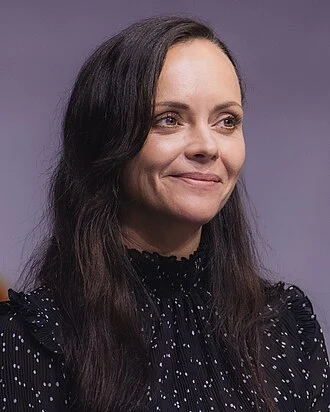
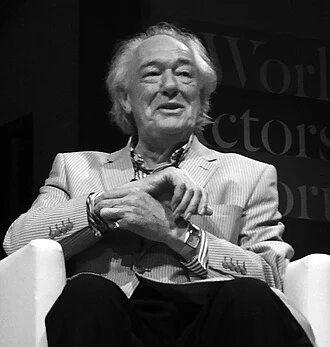
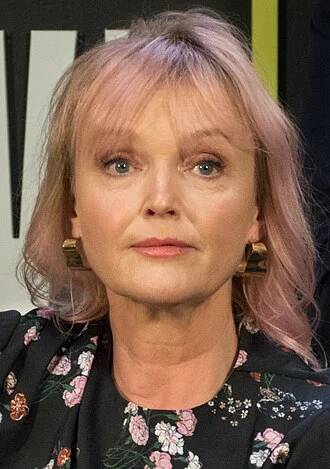
Sleepy Hollow is a 1999 Gothic supernatural horror film directed by Tim Burton from a screenplay by Andrew Kevin Walker. Co-produced by Paramount Pictures, Mandalay Pictures, Scott Rudin Productions, American Zoetrope, and Tim Burton Productions, it is based on Washington Irving's 1820 short story "The Legend of Sleepy Hollow", and stars Johnny Depp and Christina Ricci, with Miranda Richardson, Michael Gambon, Casper Van Dien, and Jeffrey Jones in supporting roles. The plot follows New York City police constable Ichabod Crane (Depp), who is sent to investigate a series of brutal murders in the upstate village of Sleepy Hollow, where he becomes romantically involved with Katrina Van Tassel (Ricci), the daughter of the richest resident of the town (Gambon). Sleepy Hollow began development in 1993 at Paramount Pictures, with Kevin Yagher originally set to direct Andrew Kevin Walker's script as a low-budget slasher film. Disagreements with Paramount resulted in Yagher being demoted to prosthetic makeup designer, and Burton was hired to direct in June 1998. Filming took place from November 1998 to May 1999. The film was an international co-production between Germany and the United States. Sleepy Hollow had its world premiere at Mann's Chinese Theatre on November 17, 1999, and was released in the United States on November 19, by Paramount Pictures. It received positive reviews from critics, and grossed $207 million. It won the Academy Award for Best Art Direction.
From Wikipedia contributors · CC BY-SACast & filmmakers
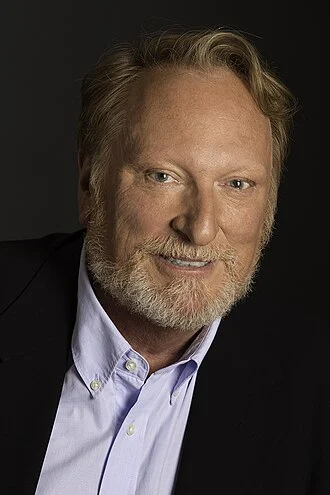
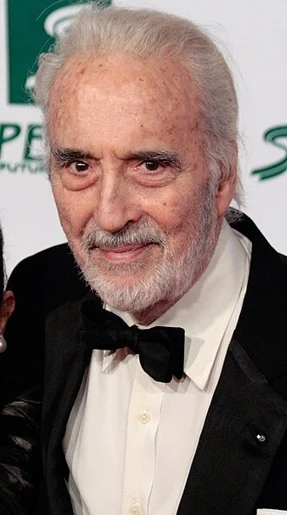
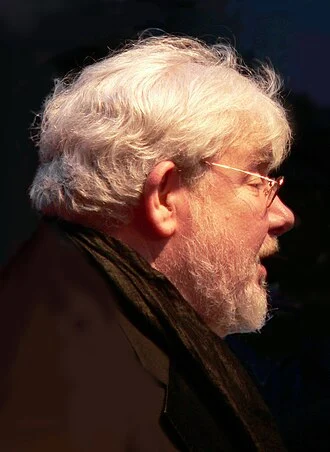
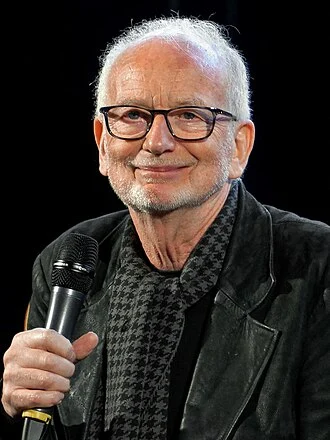
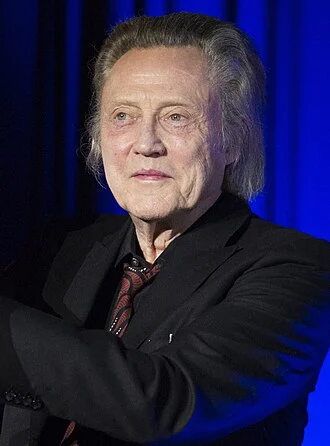
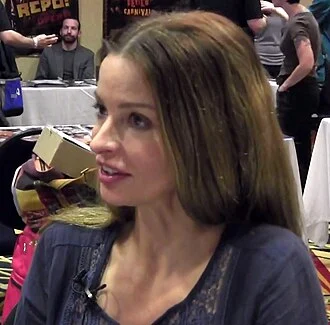
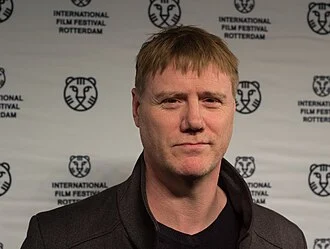
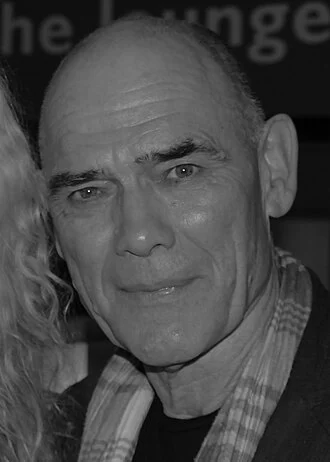
Film poster
Two pale faces look in opposite directions above a tiny galloping rider. The red mark below interrupts the otherwise muted image.
Poster source · Vybpedia article · Film publicity artworkBehind the film
Storyline (spoilers)
In the fall of 1799, pragmatic New York City constable Ichabod Crane is sent to the upstate Dutch village of Sleepy Hollow to investigate a series of brutal decapitations of its residents, which included landowner Peter Van Garrett, his son Dirk, and widow Emily Winship. Received by the insular town elders—wealthy farmer Baltus Van Tassel; doctor Thomas Lancaster; the Reverend Steenwyck; notary James Hardenbrook; and magistrate Samuel Philipse—Ichabod learns that the locals believe the killer is the undead apparition of a headless Hessian mercenary, who is trying to find his missing head.
Development
In 1993, Kevin Yagher, a special make-up effects designer who had turned to directing with Tales from the Crypt, had the notion to adapt Washington Irving's short story "The Legend of Sleepy Hollow" into a feature film. Through his agent, Yagher was introduced to Andrew Kevin Walker; they spent a few months working on a film treatment that transformed Ichabod Crane from a schoolmaster from Connecticut to a banished New York City detective. Paramount had reservations about the film, interpreting it as a typical period piece—"I wouldn't say they weren't enthusiastic about it, but they didn't see the commercial viability," producer Adam Schroeder noted. "The studio thinks 'old literary classic' and they think The Crucible. There was a fear about that...
Filming
The original intention had been to shoot Sleepy Hollow predominantly on location with a $30 million budget. Towns were scouted throughout Upstate New York along the Hudson Valley, and the filmmakers decided on Tarrytown for an October 1998 start date. The Historic Hudson Valley organization assisted in scouting locations, which included the Philipsburg Manor House and forests in the Rockefeller State Park Preserve. "They had a wonderful quality to them," production designer Rick Heinrichs reflected on the locations, "but it wasn't quite lending itself to the sort of expressionism that we were going for, which wanted to express the feeling of foreboding." Disappointed, the filmmakers scouted locations in Sturbridge, Massachusetts, and considered using Dutch colonial villages and period town recreations in the Northeastern United States.
Visual effects
The majority of Sleepy Hollows 150 visual effects shots were handled by Industrial Light & Magic (ILM), while Kevin Yagher supervised the human and creature effects. Framestore also assisted on visual effects, and The Mill handled motion control photography. In part a reaction to the computer-generated effects in Mars Attacks!, Burton opted to use as limited an amount of digital effects as possible. Ray Park, who served as the Headless Horseman stunt double, wore a blue ski mask for the chroma key effect, digitally removed by ILM. Burton and Heinrichs applied to Sleepy Hollow many of the techniques they had used in stop-motion animation on Vincent—such as forced perspective sets.
Box office
Sleepy Hollow was released in the United States on November 19, 1999, in 3,069 theaters, grossing $30,060,467 in its opening weekend at the No. 2 spot behind The World Is Not Enough. It would drop into fourth place behind the latter film, Toy Story 2 and End of Days the following weekend. Sleepy Hollow eventually earned $101,068,340 in domestic gross, and $105 million in foreign sales, coming to a worldwide total of $206,068,340.
Directed by
Written by
Cast
Title details
- Release year
- 1999
- Release date
- 1999-11-17
- Runtime
- 105 min
- Based on
- The Legend of Sleepy Hollow
- Production companies
- American Zoetrope, British Film Institute, Mandalay Entertainment, Mandalay Pictures, Paramount Pictures
- Distributors
- Netflix, UIP-Dunafilm
- Content rating
- R
- Genres
- Horror, Supernatural
- Language
- English
- Country of origin
- United States of America, Germany
- France theatrical release
- 2000-01-12
- French theatrical visa
- 98846
- Classification in France
- Interdiction aux mineurs -12 ans
Awards and nominations
Awards received (1)
- Academy Award for Best Production Design
Nominations (3)
- Academy Award for Best Cinematography
- Academy Award for Best Costume Design
- Academy Award for Best Production Design