Overview
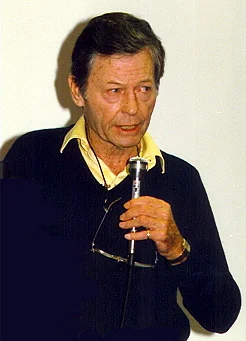
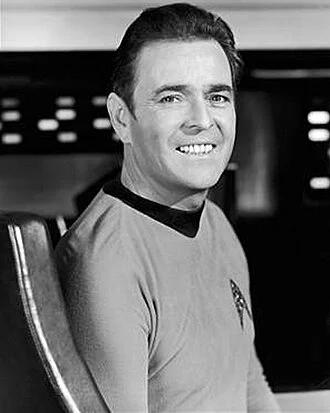
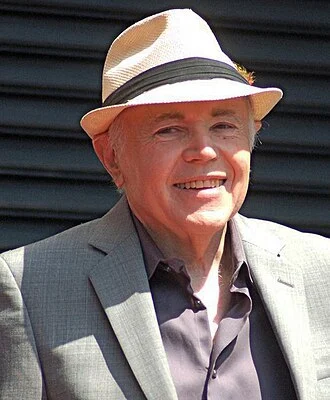
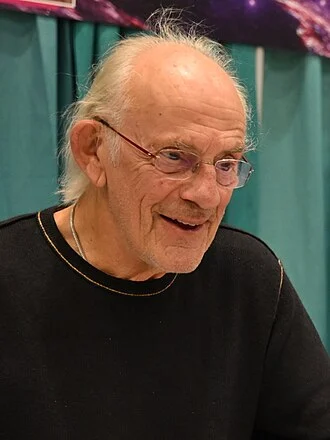
Star Trek III: The Search for Spock is a 1984 American science fiction film, written and produced by Harve Bennett, directed by Leonard Nimoy, and based on the television series Star Trek. It is the third film in the Star Trek franchise and is the second part of a three-film story arc that begins with Star Trek II: The Wrath of Khan (1982) and concludes with Star Trek IV: The Voyage Home (1986). After the death of Spock (Nimoy), the crew of the USS Enterprise return to Earth. When James T. Kirk (William Shatner) learns that Spock's spirit, or katra, is held in the mind of Dr. Leonard "Bones" McCoy (DeForest Kelley), Kirk and company steal the decommissioned USS Enterprise to return Spock's body to his homeworld. The crew must also contend with hostile Klingons, led by Kruge (Christopher Lloyd), who are bent on stealing the secrets of the powerful terraforming device, Genesis. Paramount Pictures commissioned the film after the positive critical and commercial reaction to The Wrath of Khan. Nimoy directed this film, becoming the first Star Trek cast member to do so in addition to making his feature directorial debut. Producer Harve Bennett wrote the script, starting from the end and working backwards, and intended the destruction of the Enterprise to be a shocking development. Bennett and Nimoy collaborated with effects house Industrial Light & Magic to develop storyboards and new ship designs; ILM also handled the film's many special effects sequences. Aside from a single day of location shooting, the film was shot entirely on Paramount and ILM soundstages. Composer James Horner returned to expand his themes from the previous film. The Search for Spock opened on June 1, 1984. In its first week of release, the film grossed over $16 million from almost 2,000 theaters across North America. It went on to gross $76 million at the domestic box office, with a total of $87 million worldwide. Critical reaction to The Search for Spock was generally positive, but notably less so than the previous film. Reviewers generally praised the cast, Nimoy's direction, and characters, while criticism tended to focus on the plot; the special effects were conflictingly received. Roger Ebert called the film a compromise between the tones of the first and second Star Trek films.
From Wikipedia contributors · CC BY-SACast & filmmakers




Film poster
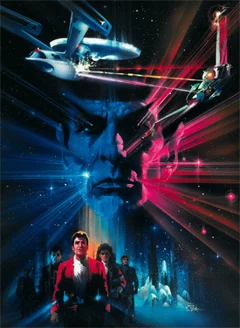
The face built into the blue shadows bridges the spacecraft above and the red-lit figures below.
Poster source · Vybpedia article · Film publicity artworkBehind the film
Storyline (spoilers)
The Federation starship limps back to Earth following a battle with the superman Khan Noonien Singh, who tried to destroy the Enterprise by detonating an experimental terraforming device known as Genesis. The casualties of the fight include Admiral James T. Kirk's Vulcan friend, Spock, whose casket was launched onto the surface of the planet created by the Genesis Device. Upon arriving at Earth Spacedock, Doctor Leonard McCoy begins to act strangely and is arrested. Starfleet Admiral Morrow visits Enterprise and informs the crew the ship is to be decommissioned; the crew is ordered not to speak about Genesis due to political fallout over the device.
Development
Star Trek II: The Wrath of Khan was a critical and commercial success, so Paramount Pictures quickly prepared for a third Star Trek film. The Wrath of Khans director Nicholas Meyer would not return; he had disagreed with changes made to his film's ending without his consent. Upon seeing The Wrath of Khan, Leonard Nimoy became "excited" about playing Spock again. When asked by Paramount if he wanted to reprise the role for the third feature, Nimoy agreed and told them "You're damned right, I want to direct that picture!" Studio chief Michael Eisner was reluctant to hire Nimoy because he mistakenly believed that the actor hated Star Trek and had demanded in his contract that Spock be killed. Nimoy was given the job after he persuaded Eisner that this was not the case. Star Trek creator Gene Roddenberry's first reaction to the news was that producer Harve Bennett had "hired a director you can't fire".
Filming
To guard against leaks that had prefigured Spock's death during production of The Wrath of Khan, Paramount took precautions to secure the sets. Set designer Cameron Birnie noted that the production's security was highly unusual; sets were built out of sequence and the crew given only as many pages as they needed to fabricate each locale. Security guards checked the picture identification cards of production staff. Any mention of the production was removed from stationery and documents, and "Trois" (three, in French) was written as a code word. Offices and workshops were bereft of identifying signage, with doors double-locked for extra protection. The Search for Spock scripts were chemically treated so that copies could be traced to the original; Nimoy's name never appeared on call sheets, and Spock was referred to in the script as "Nacluv" (Vulcan spelled backwards).
Visual effects
As with previous Star Trek films, time and money were major constraints for visual effects. The effects artists were concerned about producing the right look no matter the time involved. While effects cameraman Scott Farrar and his assistants constantly traversed the separating ILM from Paramount, teams at the effects house organized post-production effects and photography. The constant travel took a toll on Ralston, who began to forget which airlines he was taking and what city he was in. As a pause in work meant wasted time, effects editors Bill Kimberlin and Jay Ignaszewski produced usable effects shots for the live-action editors at Paramount; these half-finished, monochromatic composites gave the editors an idea of scene pacing. ILM contributed 120 shots to the film. Like Correll, Ralston used Eastman 94 for all shots that did not require bluescreen.
Directed by
Written by
Cast
Title details
- Release year
- 1984
- Release date
- 1984-06-01
- Runtime
- 105 min
- Film series
- Star Trek
- Based on
- Star Trek: The Original Series
- Production companies
- Paramount Pictures
- Distributors
- Netflix, Paramount Pictures
- Content rating
- PG
- Genres
- Science Fiction
- Language
- English
- Country of origin
- United States of America


 Opening title card