Overview
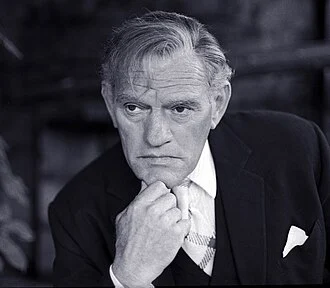
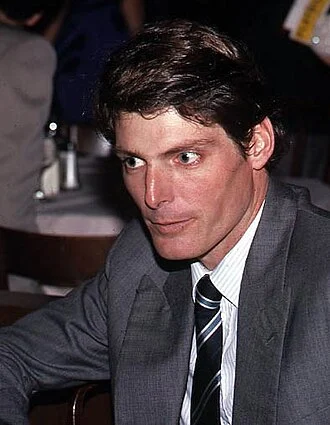
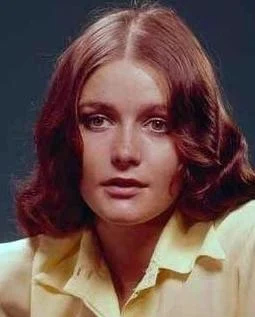
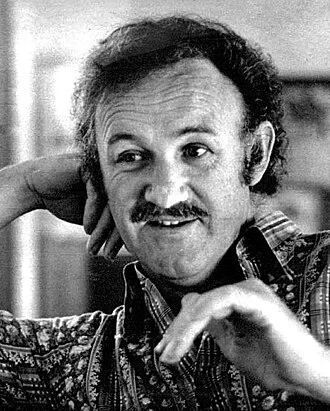
Superman (also marketed as Superman: The Movie) is a 1978 superhero film based on the DC Comics character Superman, portrayed by Christopher Reeve. It is the first of four installments in the Superman film series starring Reeve as Superman. The film was directed by Richard Donner and written by Mario Puzo, David Newman, Leslie Newman, and Robert Benton. The film features an ensemble cast including Marlon Brando, Gene Hackman, Ned Beatty, Jackie Cooper, Glenn Ford, Trevor Howard, Margot Kidder, Valerie Perrine, Maria Schell, Terence Stamp, Phyllis Thaxter and Susannah York. It depicts the origin of Superman, including his infancy as Kal-El of Krypton, son of Jor-El (Brando), and his youthful years in the rural town of Smallville. Disguised as reporter Clark Kent, he adopts a mild-mannered disposition in Metropolis and develops a romance with Lois Lane (Kidder) while battling the villainous Lex Luthor (Hackman). Ilya Salkind had the idea of a Superman film in 1973 and, after a difficult process with DC Comics, the Salkinds bought the rights to the character the following year. Several directors, most notably Guy Hamilton, and screenwriters were associated with the project before Donner was hired to direct. Tom Mankiewicz was drafted in to rewrite the script and was given a creative consultant credit. It was decided to film both Superman and its sequel Superman II (1980) simultaneously, with principal photography beginning in March 1977 and ending in October 1978. Tensions arose between Donner and the producers, and a decision was made to stop filming the sequel, of which 75 percent had already been completed, and finish the first film. The most expensive film made up to that point, with a budget of $55 million, Superman premiered at The Kennedy Center in Washington, DC, on December 10, 1978, and was released in the United Kingdom on December 14, and in the United States on December 15. The film was a critical and financial success; its worldwide box office earnings of $300 million made it the second-highest-grossing release of the year. It received praise for Reeve's performance and John Williams's musical score. The film was nominated for Best Film Editing, Best Music (Original Score) and Best Sound at the 51st Academy Awards and received a Special Achievement Academy Award for Visual Effects. Groundbreaking in its use of special effects and science fiction/fantasy storytelling, the film's legacy presaged the mainstream popularity of Hollywood's superhero film franchises. In 2017, Superman was selected for preservation in the National Film Registry by the Library of Congress.
From Wikipedia contributors · CC BY-SACast & filmmakers
The theatrical poster
Superman flies upward past a view straight down into the city. His raised fist links the brightly colored figure to the lettering suspended at the top.
Poster source · Vybpedia article · Theatrical release artworkBehind the film
Storyline (spoilers)
On the planet Krypton, Jor-El, a member of the Kryptonian high council, sentences criminals General Zod, Ursa, and Non to the Phantom Zone. He warns the council that Krypton will be destroyed by its exploding red supergiant sun, but they dismiss his concerns. Before the planet's destruction, Jor-El and his wife Lara send their infant son Kal-El to Earth, where his unique physiology grants him evolving superhuman abilities. Kal-El's spaceship touches down near Smallville, Kansas. Found by Jonathan and Martha Kent, who are astonished when the infant lifts their truck, they adopt him, naming him Clark. As he grows, hiding his powers, Jonathan believes Clark was sent to Earth for a special purpose.
Development
Ilya Salkind had first conceived the idea for a Superman film in late 1973. In November 1974, after a long, difficult process with DC Comics, the Superman film rights were purchased by Ilya, his father Alexander Salkind, and their partner Pierre Spengler. DC wanted a list of actors that were to be considered for Superman, and approved the producer's choices of Muhammad Ali, Al Pacino, James Caan, Steve McQueen, Clint Eastwood and Dustin Hoffman. The filmmakers felt it was best to film Superman and Superman II back-to-back, and to make a negative pickup deal with Warner Bros. William Goldman was approached to write the screenplay, while Leigh Brackett was considered. Ilya hired Alfred Bester, who began writing a film treatment. Alexander felt, however, that Bester was not famous enough, so he hired Mario Puzo to write the screenplay at a $600,000 salary. Brando had it in his contract to complete all of his scenes in twelve days.
Filming
Principal photography began on March 28, 1977, at Pinewood Studios for the Krypton scenes, budgeted as the most expensive film ever made at that point, which was $55 million. Because Superman was being shot simultaneously with Superman II, filming lasted nineteen months, until October 1978. Filming was originally scheduled to last between seven and eight months, but problems arose during production. John Barry served as production designer, while Stuart Craig and Norman Reynolds worked as art directors. Derek Meddings and Les Bowie were credited as visual effects supervisors. Stuart Freeborn was the make-up artist, while Barry, David Tomblin, John Glen, David Lane, Robert Lynn and an uncredited Peter Duffell and André de Toth directed second unit scenes. Vic Armstrong was hired as the stunt coordinator and Reeve's stunt double; his wife Wendy Leech was Kidder's double.
Box office
Superman set a new all-time U.S. industry record for business during a pre-Christmas week with $12 million, and set new records for Warner Bros. for their best opening day ($2.8 million) and three-day weekend ($7.5 million). For the week of December 22–28, it set an all-time U.S. weekly record of $18.5 million. It also set a record single day gross for Warner Bros. with a gross of $3.8 million. In its third weekend it grossed $13.1 million for the four-day holiday weekend setting a record 18-day gross of $43.7 million.
Awards
Superman was nominated for three Academy Awards: Best Film Editing (Stuart Baird), Best Original Score (John Williams) and Best Sound (Gordon K. McCallum, Graham V. Hartstone, Nicolas Le Messurier and Roy Charman) and received a Special Achievement Academy Award for its visual effects. Donner publicly expressed disgust that production designer John Barry and cinematographer Geoffrey Unsworth had not been recognized by the Academy. The film won the Hugo Award for Best Dramatic Presentation. At the Saturn Awards, Kidder, Barry, John Williams, and the visual effects department received awards, and the film won Best Science Fiction Film. Reeve, Hackman, Donner, Valerie Perrine, and costume designer Yvonne Blake were nominated for their work as well. In addition, Williams was nominated at the 36th Golden Globe Awards and won the Grammy Award for Best Score Soundtrack for Visual Media.
Directed by
Written by
Cast
Title details
- Release year
- 1978
- Release date
- 1978-12-10
- Runtime
- 151 min
- Film series
- Superman in film
- Based on
- Superman
- Production companies
- Warner Bros. Entertainment
- Distributors
- Warner Bros. Entertainment
- Content rating
- PG
- Genres
- Superhero
- Language
- English
- Country of origin
- United States of America, United Kingdom
- France theatrical release
- 1979-01-03
- French theatrical visa
- 50241
- Classification in France
- Tous publics
Awards and nominations
Awards received (4)
- Hugo Award for Best Dramatic Presentation
- National Board of Review: Top Ten Films
- Saturn Award for Best Science Fiction Film
- Saturn Award for Best Set Decoration
Nominations (3)
- Academy Award for Best Film Editing
- Academy Award for Best Original Score
- Academy Award for Best Sound