Overview
The Color Purple is a 1985 American epic period drama film, directed by Steven Spielberg and written by Menno Meyjes, based on the 1982 novel by Alice Walker. Spielberg's eighth film as a director, it marked a turning point in his career as it was a departure from the summer blockbusters for which he had become known. It is the first film directed by Spielberg for which John Williams did not compose the score, which was done by Quincy Jones instead. Jones also produced the film alongside Spielberg, Kathleen Kennedy and Frank Marshall. The film stars Whoopi Goldberg in her breakthrough role, along with Danny Glover, Oprah Winfrey (in her film debut), Margaret Avery, and Adolph Caesar. Filmed in Anson and Union counties in North Carolina, The Color Purple tells the coming-of-age story of a young African-American girl named Celie Harris and the brutal experiences she endured including domestic violence, incest, child sexual abuse, poverty, racism, and sexism. Upon its release by Warner Bros. on December 18, 1985, The Color Purple was a box office success, grossing $98.4 million against a budget of $15 million. The film received generally positive reviews from critics, with praise going to its acting (especially Goldberg's performance), direction, screenplay, musical score, and production values; criticism was directed by some for being "over-sentimental" and "stereotypical". The film was nominated for 11 Academy Awards, including Best Picture, but did not achieve a single win. It holds the record for most Oscar nominations without one for Best Director. It also received four Golden Globe Award nominations, with Goldberg winning Best Actress in a Drama. In 2006, the American Film Institute ranked the film 51st on its list of the most inspiring movies.
From Wikipedia contributors · CC BY-SACast & filmmakers
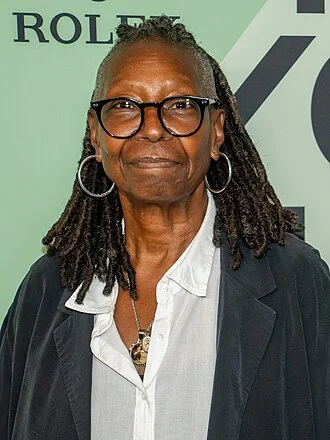


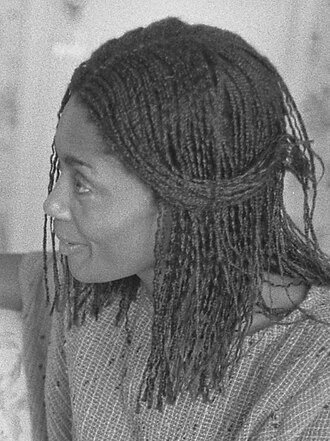
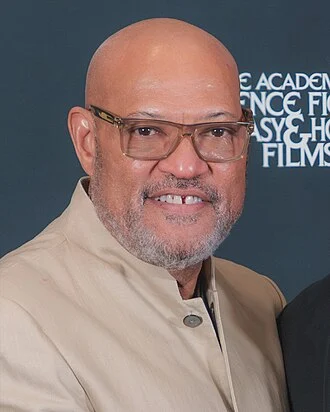

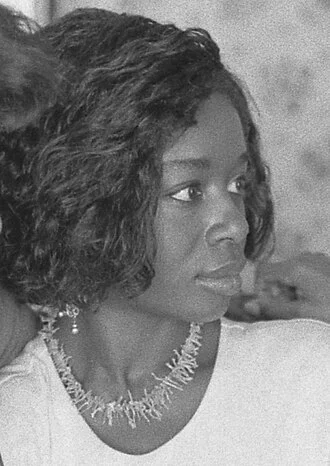
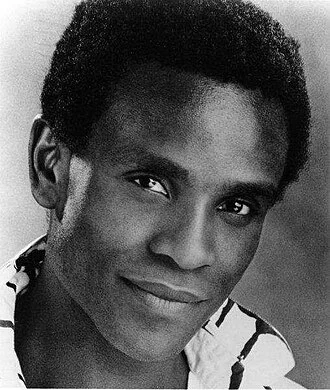
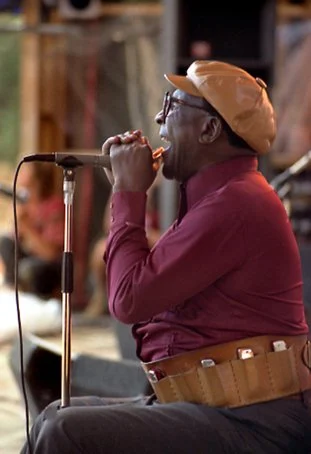
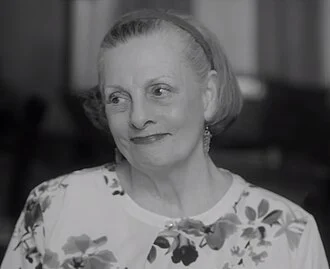

Cast and characters
- Laurence Fishburne
- Swain
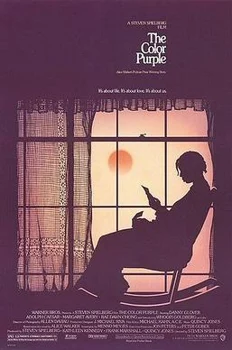
Film poster
A reader in profile is silhouetted against a gridded window. The sunset remains visible through the spaces around the chair.
Poster source · Vybpedia article · Film publicity artworkBehind the film
Storyline (spoilers)
Celie is an African-American teenager in early 20th century rural Georgia who twice has borne children by her abusive father, which were taken from her. He gives her away as a wife to Mister, who also abuses her, and his children mistreat her. Celie's loving younger sister, Nettie, runs away from their abusive father and seeks shelter with Celie. The sisters promise to write if they are separated. Mister attempts to rape Nettie, and he kicks her out after she fights him off.
Development
Alice Walker was initially reluctant to sell the film rights to her novel The Color Purple, due to Hollywood's portrayal of female and African American characters. She only agreed to executive producers Jon Peters and Peter Guber's offer after consulting with friends, who agreed the only way to improve representation of minorities was to work within the system. Walker's contract stipulated that she would serve as project consultant and that 50% of the production team, aside from the cast, would be African American, female or "people of the Third World".
Filming
While the novel was based on Walker's childhood home of Eatonton, Georgia, the film was shot predominantly in James C. Bennett's house, located in Lilesville (Anson County), and Union County in North Carolina during the summer months. Sets were constructed at an Antebellum-era plantation outside Wadesboro, while the town of Marshville had its paved roads covered in mud and clay to match the early 20th-century setting. The church was a real 60-year-old Baptist chapel that was moved piece-by-piece from its original location. Due to the summer heat, the winter sequences were shot with fabricated snow. Additional scenes were filmed on the Universal Studios Hollywood backlot, and a second unit led by Frank Marshall traveled to Kenya to shoot scenes in Nairobi and in the Maasai regions.
Box office
The Color Purple was a success at the box office, staying in U.S. theaters for 21 weeks, In terms of box office income, it ranked as the number one rated PG-13 film released in 1985, and number four overall.
Awards
The Color Purple was nominated for 11 Academy Awards (including Best Picture, Best Actress for Goldberg and Best Supporting Actress for both Avery and Winfrey). It failed to win any of them, tying the record set by 1977's The Turning Point for the most Oscar nominations without a single win. Some organizations such as the NAACP protested against the decision of the Academy of Motion Picture Arts and Sciences to not award the film any categories.
Directed by
Written by
Cast
Title details
- Release year
- 1985
- Release date
- 1985-12-18
- Runtime
- 154 min
- Based on
- The Color Purple
- Production companies
- Amblin Entertainment
- Distributors
- Warner Bros. Entertainment
- Content rating
- PG-13
- Genres
- Historical, Drama
- Language
- English
- Country of origin
- United States of America
- France theatrical release
- 1986-08-22
- French theatrical visa
- 61471
- Classification in France
- Tous publics
Awards and nominations
Awards received (2)
- National Board of Review Award for Best Film
- National Board of Review: Top Ten Films
Nominations (10)
- Academy Award for Best Actress
- Academy Award for Best Cinematography
- Academy Award for Best Costume Design
- Academy Award for Best Makeup and Hairstyling
- Academy Award for Best Original Score
- Academy Award for Best Original Song
- Academy Award for Best Picture
- Academy Award for Best Production Design
- Academy Award for Best Supporting Actress
- Academy Award for Best Writing, Adapted Screenplay