Overview
The Thing is a 1982 American science fiction horror film directed by John Carpenter from a screenplay by Bill Lancaster. Based on the 1938 John W. Campbell Jr. novella Who Goes There?, it tells the story of a group of American researchers in Antarctica who encounter the eponymous "Thing", an extraterrestrial life-form that assimilates, then imitates, other organisms. The group is overcome by paranoia and conflict as they learn that they can no longer trust each other and that any of them could be the Thing. The film stars Kurt Russell as the team's helicopter pilot R. J. MacReady, with A. Wilford Brimley, T. K. Carter, David Clennon, Keith David, Richard Dysart, Charles Hallahan, Peter Maloney, Richard Masur, Donald Moffat, Joel Polis, and Thomas G. Waites in supporting roles. Production began in the mid-1970s as a faithful adaptation of the novella, following 1951's The Thing from Another World. The Thing went through several directors and writers, each with different ideas on how to approach the story. Filming lasted roughly 12 weeks, beginning in August 1981 and took place on refrigerated sets in Los Angeles as well as in Juneau, Alaska, and Stewart, British Columbia. Of the film's $15 million budget, $1.5 million was spent on Rob Bottin's creature effects, a mixture of chemicals, food products, rubber, and mechanical parts turned by his large team into an alien capable of taking on any form. The Thing was released by Universal Pictures on June 25, 1982, to negative reviews. Critics praised the special effects achievements but criticized their visual repulsiveness, while others found the characters poorly realized. The film grossed $19.6 million during its theatrical run. Many reasons have been cited for its failure to impress audiences: competition from films such as Universal's own E.T. the Extra-Terrestrial, which offered an optimistic view of alien visitation; a summer that had been filled with successful science fiction and fantasy films; and an audience living through a recession, diametrically opposed to The Thing's nihilistic and bleak tone. The film found a cult following when it was released on home video and television and it has since been reappraised as one of the best science fiction and horror films ever made. Numerous film makers have noted its influence on their work, and it has been referred to in other media such as television and video games. The Thing has spawned merchandise — including a 1982 novelization, comic book sequels, haunted house attractions, and board games — as well as a video game of the same title and a 2011 prequel film of the same title. In 2025, it was selected for preservation in the United States National Film Registry by the Library of Congress as being "culturally, historically or aesthetically significant".
From Wikipedia contributors · CC BY-SACast & filmmakers
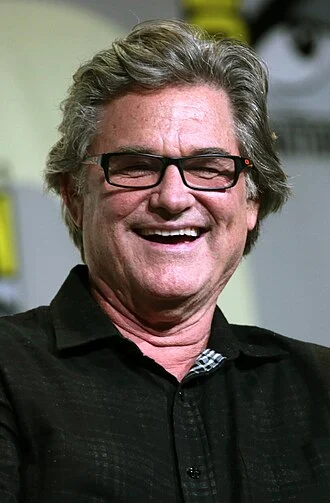
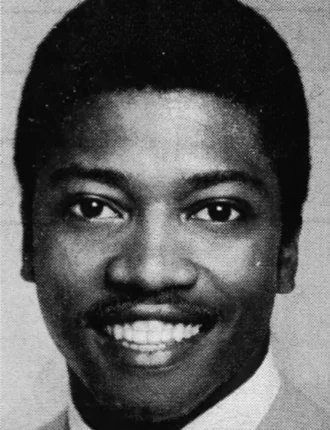
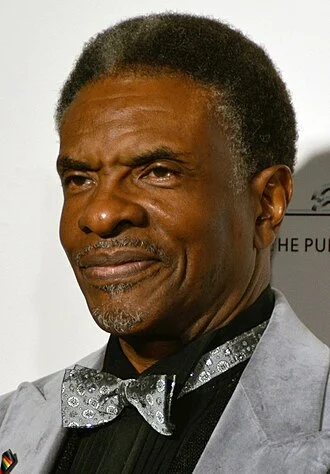
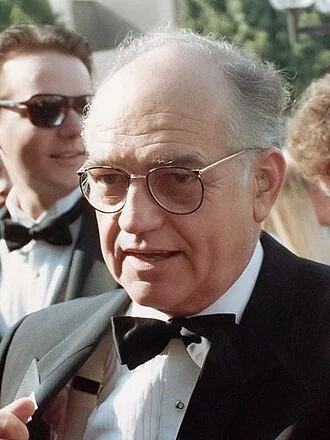
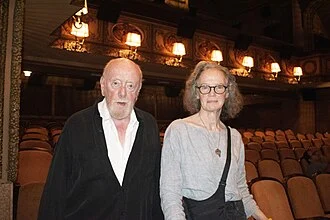
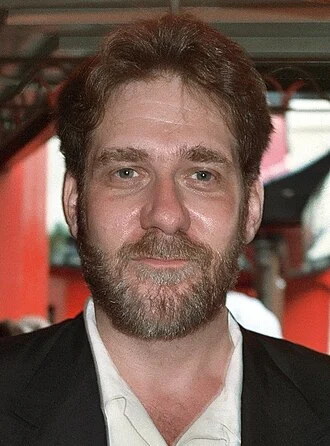
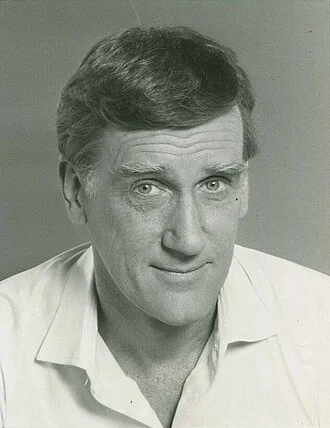

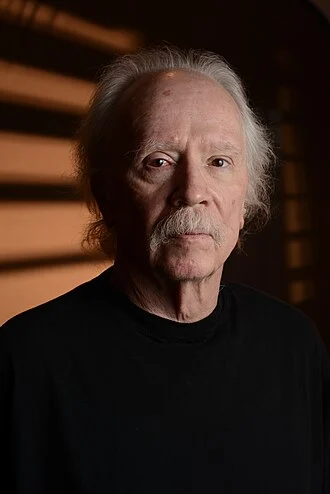
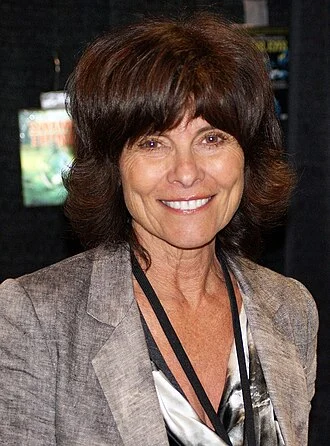
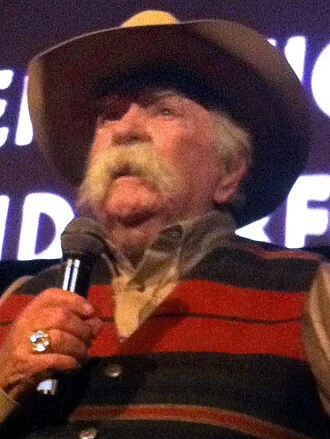
Cast and characters
- Thomas Waites
- Windows
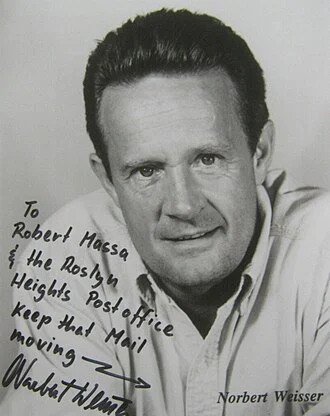
- The Thing also features Norbert Weisser
- one of the Norwegians
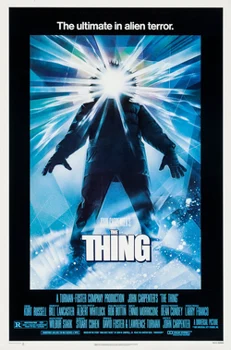
The theatrical poster
A burst of white light takes the place of a figure's face. Jagged blue rays spread outward through the otherwise recognizable outline of a winter coat.
Poster source · Vybpedia article · Theatrical release artworkBehind the film
Storyline (spoilers)
In Antarctica, a Norwegian helicopter pursues a sled dog to an American research station. The Americans witness the passenger accidentally blow up the helicopter in addition to himself. The pilot fires a rifle and shouts at the Americans, but they cannot understand him and he is shot dead in self-defense by station commander Garry. The American helicopter pilot, R. J. MacReady, and Dr. Copper leave to investigate the Norwegian base. Among the charred ruins and frozen corpses, they find the burnt corpse of a malformed humanoid, which they transfer to the American station. Their biologist, Blair, autopsies the remains and finds a normal set of human organs.
Development
Development of the film began in the mid-1970s when David Foster and fellow producer Lawrence Turman suggested to Universal Pictures an adaptation of the 1938 John W. Campbell novella Who Goes There? It had been loosely adapted once before in Howard Hawks' and Christian Nyby's 1951 film The Thing from Another World, but Foster and Turman wanted to develop a project that stuck more closely to the source material. Screenwriters Hal Barwood and Matthew Robbins held the rights to make an adaptation, but passed on the opportunity to make a new film, so Universal obtained the rights from them. In 1976, Wilbur Stark had purchased the remake rights to 23 RKO Pictures films, including The Thing from Another World, from three Wall Street financiers who did not know what to do with them, in exchange for a return when the films were produced.
Filming
The Thing was storyboarded extensively by Mike Ploog and Mentor Huebner before filming began. Their work was so detailed that many of the film's shots replicate the image layout. Cundey pushed for the use of anamorphic format aspect ratio, believing that it allowed for placing several actors in an environment, and making use of the scenic vistas available, while still creating a sense of confinement within the image. It also enabled the use of negative space around the actors to imply something may be lurking just offscreen.
Box office
During its opening weekend, the film earned $3.1million from 840 theatersan average of $3,699 per theaterfinishing as the number eight film of the weekend behind supernatural horror Poltergeist ($4.1million), which was in its fourth weekend of release, and ahead of action film Megaforce ($2.3million). It dropped out of the top10 grossing films after three weeks, and ended its run earning a total of $19.6million against its $15million budget, making it only the 42nd highest-grossing film of 1982. It was not a box office failure, nor was it a hit.
Awards
The Thing received nominations from the Academy of Science Fiction, Fantasy and Horror Films for Best Horror Film and Best Special Effects, but lost to Poltergeist and E.T. the Extra-Terrestrial, respectively. The film was nominated at the Razzie Awards for Worst Musical Score.
Directed by
Written by
Cast
Title details
- Release year
- 1982
- Release date
- 1982-06-25
- Runtime
- 109 min
- Film series
- Apocalypse Trilogy
- Based on
- Who Goes There?
- Production companies
- Universal Pictures
- Distributors
- Netflix, Universal Pictures
- Content rating
- R
- Genres
- Horror, Science Fiction
- Language
- English
- Country of origin
- United States of America
- France theatrical release
- 1982-10-27
- French theatrical visa
- 56369
- Classification in France
- Interdiction aux mineurs -12 ans
Awards and nominations
Nominations (3)
- Golden Raspberry Award for Worst Musical Score
- Saturn Award for Best Horror Film
- Saturn Award for Best Special Effects