Overview
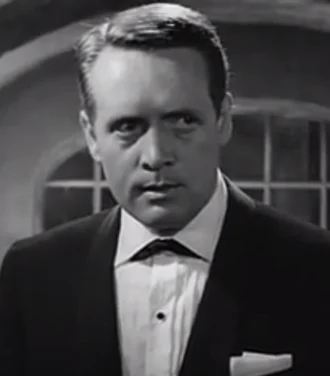
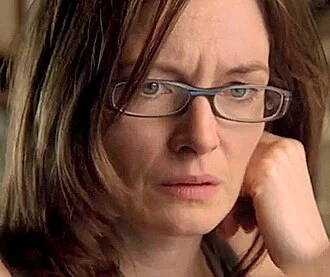
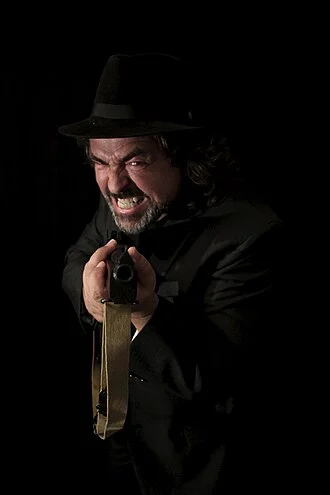
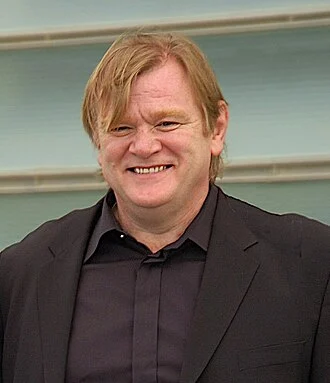
Braveheart is a 1995 American epic historical war drama film directed and produced by Mel Gibson, who portrays Scottish warrior William Wallace in the First War of Scottish Independence. The film also stars Sophie Marceau, Patrick McGoohan, Catherine McCormack and Angus Macfadyen. The story is inspired by Blind Harry's 15th century epic poem The Actes and Deidis of the Illustre and Vallyeant Campioun Schir William Wallace and was adapted for the screen by Randall Wallace. Development on the film initially started at Metro-Goldwyn-Mayer (MGM) when producer Alan Ladd Jr. picked up the project from Wallace, but when MGM was going through new management, Ladd left the studio and took the project with him. Despite initially declining, Gibson eventually decided to direct the film and to star as Wallace. The film, which was produced by Gibson's Icon Productions and The Ladd Company, was distributed by Paramount Pictures in the United States and Canada and by 20th Century Fox in other countries. Released on May 24, 1995, Braveheart was a critical and commercial success, receiving praise for its battle scenes, production design, musical score, and acting performances, though it received some criticism for its historical inaccuracies. The film received numerous accolades; at the 68th Academy Awards, it was nominated for ten awards, winning five, including Best Picture and Best Director for Gibson. A legacy sequel, Robert the Bruce, was released in 2019.
From Wikipedia contributors · CC BY-SACast & filmmakers
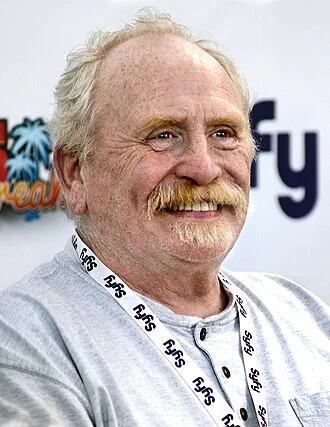
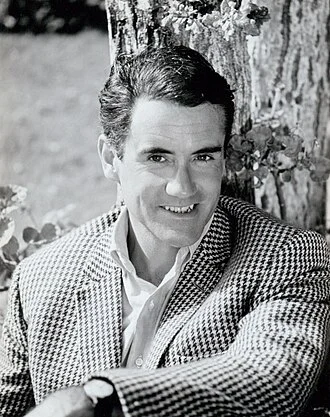
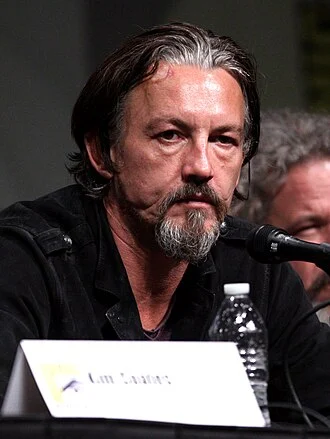
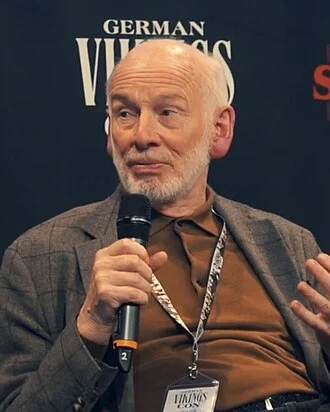
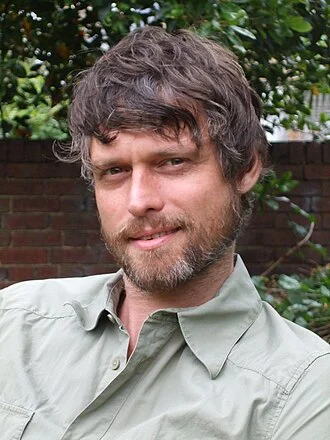
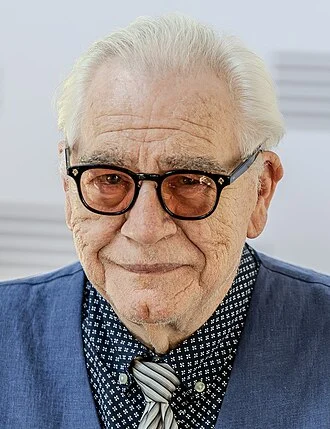
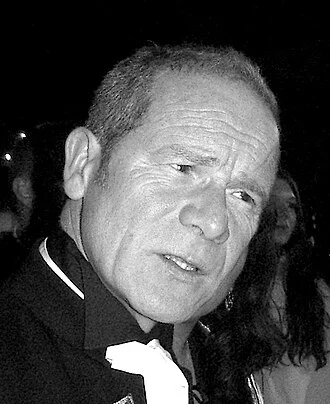
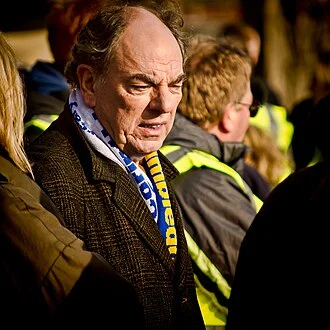
Cast and characters
- James Robinson
- William Wallace
- Alan Tall
- Elder Stewart
- Peter Hanly
- Edward, Prince of Wales
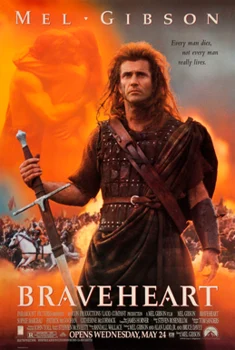
The theatrical poster
Wallace grips an upright sword beneath a wash of orange light. The faint face behind him gives the battlefield portrait a second, more personal register.
Poster source · Vybpedia article · Film poster artworkBehind the film
Storyline (spoilers)
In 1280, Edward I of England, known as "Longshanks", conquers Scotland following the death of the Scots' king, who left no heir. Young William Wallace witnesses the aftermath of Longshanks' execution of several Scottish nobles, then loses his father and brother when they resist the English. He leaves home to be raised by his uncle, Argyle. Years later, Longshanks grants his noblemen land and privileges in Scotland, including jus primae noctis, while his son marries French princess Isabelle. Meanwhile, a grown Wallace returns home and secretly marries his childhood friend Murron MacClannough. Soon after, Wallace rescues Murron from a soldier, but Murron is subsequently captured and executed. In retribution, Wallace and the locals overthrow the garrison, beginning a rebellion that soon spreads. Longshanks orders his son to stop Wallace while he campaigns in France.
Development
Producer Alan Ladd Jr. initially had the project at MGM-Pathé Communications when he picked up the script from Randall Wallace. When Metro-Goldwyn-Mayer (MGM) was going through new management in 1993, Ladd left the studio and took some of its top properties, including Braveheart. Mel Gibson came across the script and even though he liked it, he initially passed on it. However, the thought of it kept coming back to him, and he ultimately decided to take on the project. Gibson was initially interested in directing only and considered Brad Pitt in the role of Sir William Wallace, but later reluctantly agreed to play Wallace as well. He also considered Jason Patric for the role. Sean Connery was approached to play King Edward, but he declined due to other commitments. Gibson said that Connery's pronunciation of "Goulash" helped him with the Scottish accent for the film.
Filming
Filming was initially due to take place fully in the United Kingdom, but most of the shoot was moved to Ireland at short notice after lobbying from the Irish government and their offer to supply 1,600 members of the Irish Army Reserve as extras. Shooting was planned to take 12 weeks on location in Ireland and at Ardmore Studios, plus five weeks on location in Scotland. Principal photography on the film took place between June 6, 1994, and October 28, 1994. To lower costs, Gibson had the same extras portray both armies. The reservists had been given permission to grow beards and swapped their military uniforms for medieval garb. The film was shot in the anamorphic format with Panavision C- and E-Series lenses. Gibson also later said that while filming a battle scene a horse nearly "killed him" but his stunt double was able to save him as the horse fell.
Box office
Braveheart grossed $75.5million in the United States and Canada and $133.5million in other territories, for a worldwide total of $209.0million, against a budget of $53–$72million.
Directed by
Written by
Cast
Title details
- Release year
- 1995
- Release date
- 1995-05-18
- Runtime
- 178 min
- Production companies
- Icon Productions, The Ladd Company
- Distributors
- Disney+, InterCom, Netflix, Paramount Pictures
- Content rating
- R
- Genres
- Biography, Drama, Historical
- Language
- English
- Country of origin
- United States of America
- France theatrical release
- 1995-10-04
- French theatrical visa
- 88091
- Classification in France
- Tous publics
- Netflix reported views
- 1,100,000 · Braveheart · 2026 H1
Awards and nominations
Awards received (6)
- Academy Award for Best Cinematography
- Academy Award for Best Director
- Academy Award for Best Makeup and Hairstyling
- Academy Award for Best Picture
- Academy Award for Best Sound Editing
- National Board of Review: Top Ten Films
Nominations (10)
- Academy Award for Best Cinematography
- Academy Award for Best Costume Design
- Academy Award for Best Director
- Academy Award for Best Film Editing
- Academy Award for Best Makeup and Hairstyling
- Academy Award for Best Original Dramatic Score
- Academy Award for Best Picture
- Academy Award for Best Sound
- Academy Award for Best Sound Editing
- Academy Award for Best Writing, Original Screenplay