Overview
Child's Play is a 1988 American supernatural slasher film directed by Tom Holland, from a screenplay he co-wrote with Don Mancini and John Lafia based on a story by Mancini. The film stars Catherine Hicks, Chris Sarandon, Alex Vincent, and Brad Dourif as Charles Lee Ray and the voice of Chucky. The plot follows a widowed mother who gives a new doll to her son, unaware that it is possessed by the soul of a serial killer. Child's Play was released in the United States on November 9, 1988, by MGM/UA Communications Co. through its United Artists label. It received generally positive reviews from critics and grossed more than $44 million against a production budget of $9 million. Along with the film gaining a cult following, the box office success also spawned a media franchise that includes a series of six sequels, a television series, merchandise, novels, comic books, a video game, and a reboot. The original Child's Play film was distributed by United Artists, although the rights to the series were sold to Universal Pictures in 1990. MGM (via United Artists) retained the rights to the original film and Orion Pictures (through United Artists Releasing) also distributed the reboot in 2019. A sequel, Child's Play 2, was released in 1990.
From Wikipedia contributors · CC BY-SACast & filmmakers

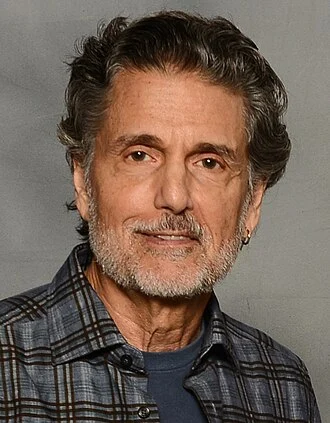

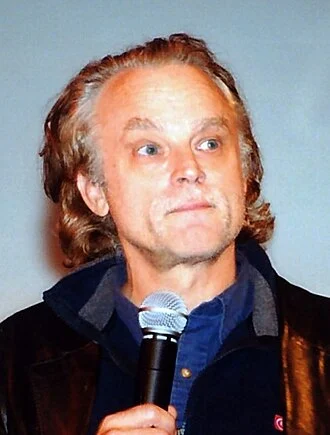
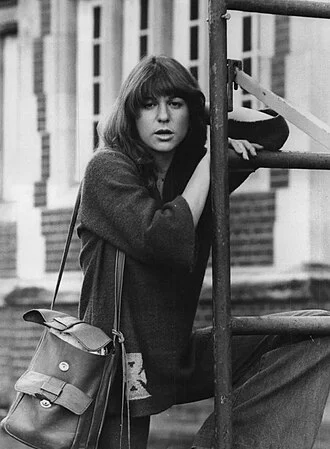
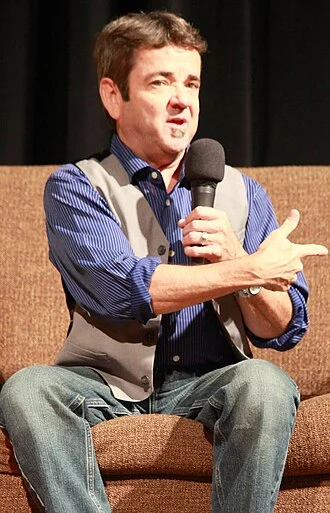

Cast and characters
- Jack Colvin
- Dr. Ardmore
Film poster
A child's eye watches a building outlined by lightning. The drastic change in scale makes the entire street look like a plaything.
Poster source · Vybpedia article · Film publicity artworkBehind the film
Storyline (spoilers)
Police Detective Mike Norris chases fugitive serial killer Charles Lee Ray, known as the "Lakeshore Strangler", through the streets of Chicago and into a toy store while Ray's accomplice, Eddie Caputo, flees the scene with Norris' partner, Jack Santos, pursuing him. Shot by Norris and dying, Ray invokes the power of Damballa and casts a voodoo spell to transfer his soul into a nearby Good Guy-brand talking doll. The store is struck by lightning, causing an explosion. Shortly thereafter, Norris finds Ray's lifeless body next to the doll.
Development
According to an interview with Mental Floss, screenwriter Don Mancini first conceived of the concept while studying as a literature major at UCLA in 1985. He wrote the first draft of the screenplay while studying film at Columbia University in 1986. Mancini was inspired by the consumerism of the 1980s and the effect of marketing on children based on his experiences with his father, an advertising executive and the Cabbage Patch riots of 1983. Mancini's troubled relationship with his own father and his experiences of alienation as a gay man caused him to center the script around a child with a single mother and no father figure. He was also influenced by the Cabbage Patch Kids, Trilogy of Terror, Magic, Poltergeist, the character of Freddy Krueger from A Nightmare on Elm Street and The Twilight Zone episode "Living Doll".
Filming
Principal photography began on December 31, 1987, and wrapped on March 5, 1988, with a budget of $9–13 million. For scenes where Chucky had to move around in wide shots, a little-person actor in a life-sized costume, Ed Gale, would portray Chucky in scenes where the character is walking, the props on the set enlarged to fit the size of the actor.
Visual effects
The film used various ways to portray Chucky, including radio-controlled animatronics operated by up to nine puppeteers, extras of short stature, and child actors. Kirschner initially hired Chris Walas to handle the puppetry for the film after his work on Gremlins (1984), but he quit in order to direct The Fly II (1989). After Rick Baker declined to act as Walas's replacement, Kirschner put Kevin Yagher in charge of the puppetry for the film. Various animatronics and cosmetics were used for every scene. Throughout the film, Chucky transitions from appearing as a normal toy to appearing more human, with his hairline receding throughout the film. The film created multiple Chucky animatronics such as a flailing tantrum Chucky, a walking Chucky, and a stationary Chucky. Gale claims that the filmmakers were not sure how well the animatronics would work and shot most scenes with both him and the puppets.
Directed by
Written by
Cast
Title details
- Release year
- 1988
- Release date
- 1988-11-09
- Runtime
- 83 min
- Production companies
- Metro-Goldwyn-Mayer, United Artists
- Distributors
- Netflix, UIP-Dunafilm
- Content rating
- R
- Genres
- Slasher
- Language
- English
- Country of origin
- United States of America
- France theatrical release
- 1989-04-05
- French theatrical visa
- 69435
- Classification in France
- Interdiction aux mineurs -12 ans