Overview
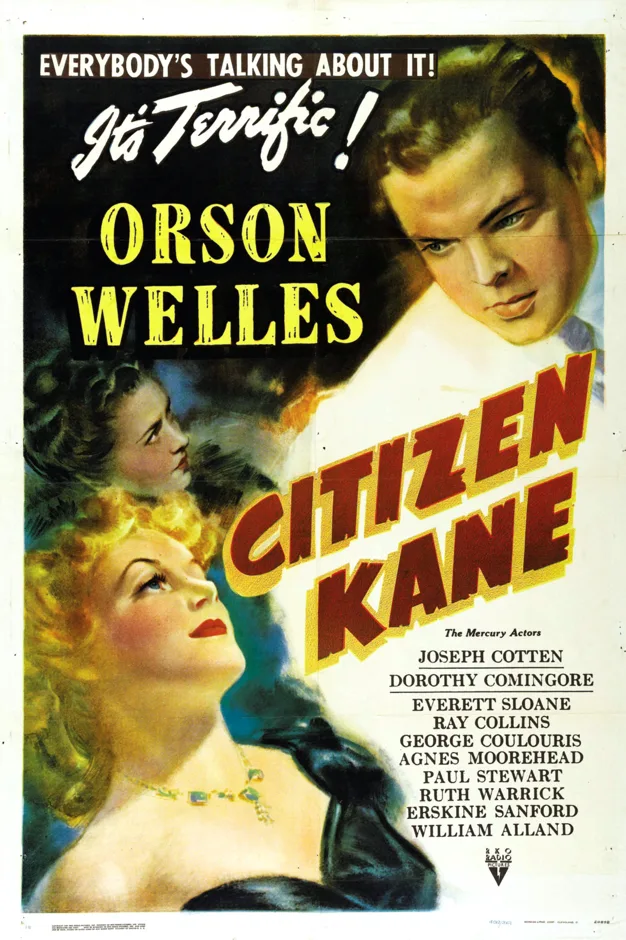
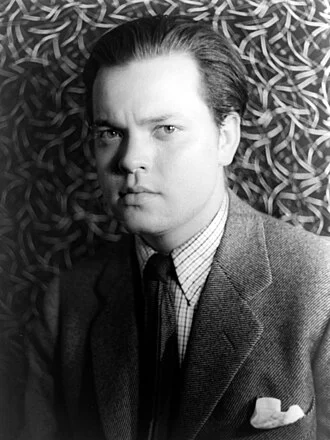
Citizen Kane is a 1941 American drama film directed, produced by, and starring Orson Welles and co-written by Welles and Herman J. Mankiewicz, and was Welles's first feature film. The quasi-biographical film examines the life and legacy of Charles Foster Kane, played by Welles, a composite character based on American media barons William Randolph Hearst and Joseph Pulitzer, and Chicago tycoons Samuel Insull and Harold McCormick, as well as aspects of the screenwriters' own lives. After the Broadway success of Welles's Mercury Theatre and the controversial 1938 radio broadcast "The War of the Worlds" on The Mercury Theatre on the Air, Welles was courted by Hollywood. He signed a contract with RKO Pictures in 1939. Although it was unusual for an untried director, he was given freedom to develop his own story, to use his own cast and crew, and to have final cut privilege. Following two abortive attempts to get a project off the ground, he wrote the screenplay for Citizen Kane with Herman J. Mankiewicz. Principal photography took place in 1940, the same year that its innovative trailer was shown, and the film was released in 1941. Upon its release, Hearst prohibited any mention of the film in his newspapers. Although it was a critical success, Citizen Kane failed to recoup its costs at the box office. The film faded from view after its release, but returned to public attention when it was praised by French critics such as André Bazin and re-released in 1956. In 1958, the film was voted number nine on the prestigious Brussels 12 list at the 1958 World Expo. Citizen Kane is frequently cited as the greatest film ever made. For 50 years (five decennial polls: 1962, 1972, 1982, 1992 and 2002), it stood at number one in the British Film Institute's Sight and Sound decennial poll, and it topped the American Film Institute's 100 Years ... 100 Movies list in 1998, as well as its 2007 update. The Library of Congress selected Citizen Kane as an inductee of the 1989 inaugural group of 25 films for preservation in the United States National Film Registry for being "culturally, historically, or aesthetically significant". The film was nominated for Academy Awards in nine categories and it won for Best Writing (Original Screenplay) by Mankiewicz and Welles. Citizen Kane is praised for Gregg Toland's cinematography, Robert Wise's editing, Bernard Herrmann's score and its narrative structure, all of which have been considered innovative and precedent-setting.
From Wikipedia contributors · CC BY-SACast & filmmakers
Behind the film
Storyline (spoilers)
In a mansion called Xanadu, part of a vast palatial estate in Florida, the elderly Charles Foster Kane is on his deathbed. Holding a snow globe, he utters his last word, "Rosebud", and dies. A newsreel obituary tells the life story of Kane, an enormously wealthy newspaper publisher and industry magnate. Kane's death becomes sensational news around the world, and the newsreel's producer tasks reporter Jerry Thompson with discovering the meaning of "Rosebud".
Development
Hollywood had shown interest in Welles as early as 1936. He turned down three scripts sent to him by Warner Bros. In 1937, he declined offers from David O. Selznick, who asked him to head his film company's story department, and William Wyler, who wanted him for a supporting role in Wuthering Heights. "Although the possibility of making huge amounts of money in Hollywood greatly attracted him," wrote biographer Frank Brady, "he was still totally, hopelessly, insanely in love with the theater, and it is there that he had every intention of remaining to make his mark."
Filming
Production advisor Miriam Geiger quickly compiled a handmade film textbook for Welles, a practical reference book of film techniques that he studied carefully. He then taught himself filmmaking by matching its visual vocabulary to The Cabinet of Dr. Caligari, which he ordered from the Museum of Modern Art, and Jean Renoir. "As it turned out, the first day I ever walked onto a set was my first day as a director," Welles said. "I'd learned whatever I knew in the projection room—from Ford. After dinner every night for about a month, I'd run Stagecoach, often with some different technician or department head from the studio, and ask questions. 'How was this done?' 'Why was this done?' It was like going to school."
Awards
It was widely believed the film would win most of its Academy Award nominations, but it received only the award for Best Original Screenplay. Variety reported that block voting by screen extras deprived Citizen Kane of Best Picture and Best Actor, and similar prejudices were likely to have been responsible for the film receiving no technical awards. In 2006, the Writers Guild of America ranked its screenplay 4th in WGA’s list of 101 Greatest Screenplays.
Directed by
Cast
Title details
- Release year
- 1941
- Runtime
- 119 min
- Distributors
- Fandango, HBO Max, Netflix, RKO Pictures
- Content rating
- PG
- Genres
- Drama
Awards and nominations
Awards received (3)
- Academy Award for Best Writing, Original Screenplay
- National Board of Review Award for Best Film
- National Board of Review: Top Ten Films
Nominations (9)
- Academy Award for Best Actor
- Academy Award for Best Art Direction, Black and White
- Academy Award for Best Cinematography, Black-and-White
- Academy Award for Best Director
- Academy Award for Best Film Editing
- Academy Award for Best Original Dramatic Score
- Academy Award for Best Picture
- Academy Award for Best Sound
- Academy Award for Best Writing, Original Screenplay