Overview
Driving Miss Daisy is a 1989 American comedy drama film directed by Bruce Beresford and written by Alfred Uhry, based on Uhry's 1987 play. The film stars Jessica Tandy, Morgan Freeman, and Dan Aykroyd. Freeman reprised his role from the original Off-Broadway production. The story defines Daisy and her point of view—through a network of relationships and emotions by focusing on her home life, synagogue, friends, family, fears, and concerns—over a twenty-five-year period. Driving Miss Daisy was a critical and commercial success upon its release and at the 62nd Academy Awards received nine nominations, and won four: Best Picture, Best Actress (for Tandy), Best Makeup, and Best Adapted Screenplay. As of 2025, it is the most recent PG-rated film to have won Best Picture.
From Wikipedia contributors · CC BY-SACast & filmmakers
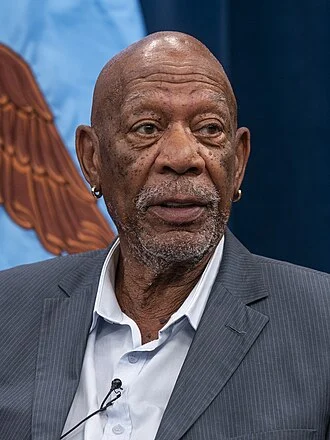
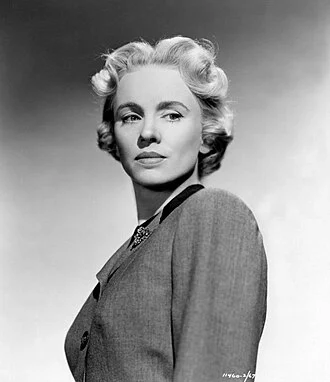
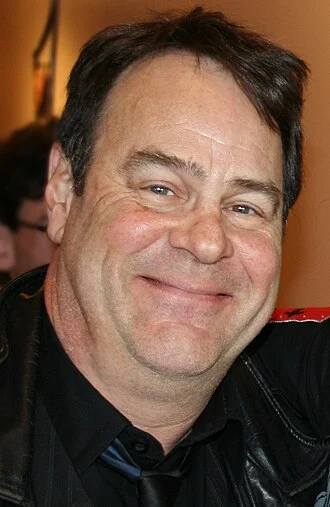
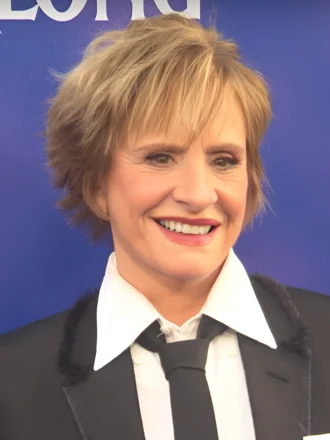

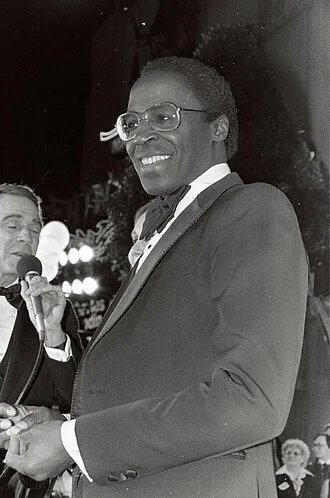
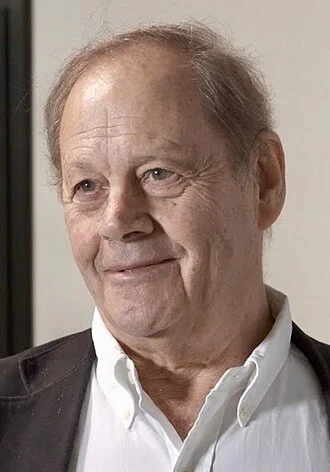
Cast and characters
- Esther Rolle
- Idella
- Jo Ann Havrilla
- Miss McClatchey
- William Hall, Jr.
- Oscar
- Alvin M. Sugarman
- Dr. Weil
- Clarice F. Geigerman
- Nonie
- Muriel Moore
- Miriam
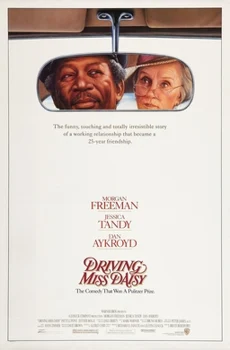
The theatrical poster
The driver and passenger share a rearview mirror at the top of a mostly empty cream sheet. Fitting two faces into that small rectangle establishes their relationship without showing the car.
Poster source · Vybpedia article · Theatrical release artworkBehind the film
Storyline (spoilers)
In 1948, Miss Daisy Werthan, a 72-year-old wealthy, Jewish, widowed, retired schoolteacher, lives alone in Atlanta, Georgia, except for a black housekeeper, Idella, who comes in daily. When Daisy accidentally drives her 1946 Chrysler Windsor into her neighbor's yard, her 40-year-old son, Boolie, buys her a Hudson Commodore and hires 60-year-old Hoke Colburn, a black chauffeur, as Daisy can no longer drive due to her being a high insurance risk. Boolie tells Hoke that Daisy may not appreciate his efforts, but she cannot fire him, because Boolie is his employer. At first, Daisy refuses to let anyone drive her, but Hoke's patience pays off, and she reluctantly accepts the first two trips; one to the Piggly Wiggly supermarket, the other to her synagogue. Then she tries to get Boolie to fire Hoke after she had discovered a can of salmon missing from her pantry which she believes Hoke had stolen the previous day.
Box office
Driving Miss Daisy was given a limited release on December 15, 1989, earning $73,745 in three theaters. The film was given a wide release on January 26, 1990, earning $5,705,721 over its opening weekend in 895 theaters, becoming the number one film in the United States. It remained at number 1 the following week but was knocked off the top spot in its third weekend of wide release by Hard to Kill. It returned to number one the next weekend and remained there for a fourth week. The film ultimately grossed $106,593,296 in North America, and $39,200,000 in other territories, for a worldwide total of $145,793,296.
Directed by
Written by
Cast
Title details
- Release year
- 1989
- Release date
- 1989-12-13
- Runtime
- 99 min
- Based on
- Driving Miss Daisy
- Production companies
- Warner Bros. Entertainment
- Distributors
- Netflix, Warner Bros. Entertainment
- Content rating
- PG
- Genres
- Drama, Comedy
- Language
- English
- Country of origin
- United States of America
- France theatrical release
- 1990-04-18
- French theatrical visa
- 73568
- Classification in France
- Tous publics
- Netflix reported views
- 100,000 · Driving Miss Daisy · 2026 H1
Awards and nominations
Awards received (6)
- Academy Award for Best Actress
- Academy Award for Best Makeup and Hairstyling
- Academy Award for Best Picture
- Academy Award for Best Writing, Adapted Screenplay
- National Board of Review Award for Best Film
- National Board of Review: Top Ten Films
Nominations (9)
- Academy Award for Best Actor
- Academy Award for Best Actress
- Academy Award for Best Costume Design
- Academy Award for Best Film Editing
- Academy Award for Best Makeup and Hairstyling
- Academy Award for Best Picture
- Academy Award for Best Production Design
- Academy Award for Best Supporting Actor
- Academy Award for Best Writing, Adapted Screenplay