Overview
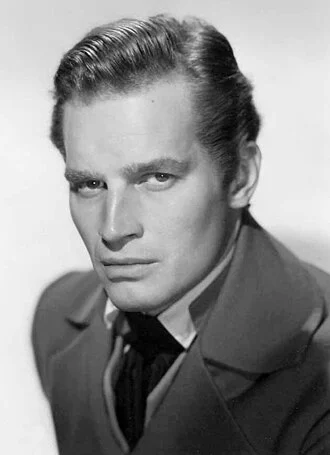
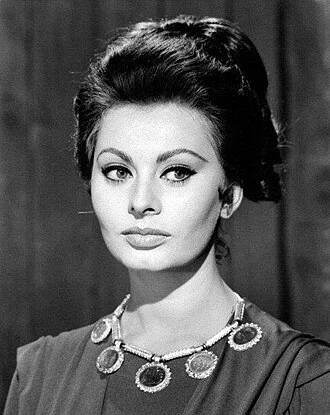
El Cid is a 1961 epic historical drama film directed by Anthony Mann and produced by Samuel Bronston. The film is loosely based on the life of the 11th-century Castilian knight and warlord Rodrigo Díaz de Vivar, called "El Cid" (from the Arabic as-Sayyed السّيّد, meaning "The Lord"). The film stars Charlton Heston in the title role and Sophia Loren as El Cid's wife Doña Jimena, spelled "Chimene" in the script and pronounced that way (shim-ain) in the film. The screenplay is credited to Fredric M. Frank, Philip Yordan and Ben Barzman, with uncredited contributions by Bernard Gordon. During the late 1950s, Samuel Bronston had established his own production studio in Madrid, Spain. To strengthen cordial ties to the Spanish government ruled by Francisco Franco, Bronston began developing a biographical film of El Cid. During his reign, Franco had admired and compared himself to El Cid. In 1960, Bronston purchased Frederic M. Frank's script, and hired Anthony Mann to direct the film. Philip Yordan was later hired to rewrite the script, although Mann later recruited Ben Barzman to write the final screenplay. Before principal photography began, Bronston purchased the rights to a rival biographical film developed by Cesáreo González's Aspa Films, making the film an Italian co-production. On a $7 million budget, filming of El Cid began in September 1960 and concluded in April 1961. El Cid premiered on December 6, 1961 at the Metropole Theatre in London, and was released on December 14 in the United States. The film received largely positive reviews praising the performances of Heston and Loren, the cinematography, and the musical score. It went on to gross $26.6 million during its initial theatrical run. It was nominated for three Academy Awards for Best Art Direction, Best Music Score of a Dramatic or Comedy Picture, and Best Original Song.
From Wikipedia contributors · CC BY-SACast & filmmakers
Cast and characters
- Gary Raymond
- Prince Sancho
- Ralph Truman
- King Ferdinand
- Massimo Serato
- Fañez
- Hurd Hatfield
- Arias
- Tullio Carminati
- Al-Jarifi
- Fausto Tozzi
- Dolfos
- Christopher Rhodes
- Don Martín
- Carlo Giustini
- Bermúdez
Behind the film
Storyline (spoilers)
In 11th century General Ben Yusuf of the Almoravid dynasty has summoned all the emirs of Al-Andalus to North Africa. He chastises them for co-existing peacefully with their Christian neighbours, which goes against his dream of Islamic world domination. The emirs return to Spain with orders to resume hostilities with the Christians, while Ben Yusuf readies his army for a full-scale invasion.
Development
In 1955, producer Samuel Bronston entered into cooperation with the United States Navy to film the biopic John Paul Jones (1959). The country of Spain was recommended to him as a filming location by Jose Maria Areilza, then-Spanish Ambassador to the United States when they were seated together at a dinner party in Washington, D.C. Bronston agreed and established his namesake production studio near Las Rozas in Madrid. During filming, the production was allowed by the Francoist Spanish government to film sequences inside the Royal Palace of Madrid. After John Paul Jones (1959) was completed, Bronston and director John Farrow began developing their next project King of Kings (1961). While the project was in development, in 1958, Bronston began considering El Cid as a potential project, but it would be set aside until King of Kings reached completion.
Filming
Principal photography began November 14, 1960 at Sevilla Studios in Madrid, Spain. Filming was reported to spend at least four months of exterior shooting in Spain which would be followed by a final month of interior shooting at the Cinecittà Studios in Rome. 15 war machines and siege towers were constructed from historical artwork, and 35 boats were decorated with battlements to serve as the Moorish fleet. Tensions between Mann and Canutt rose as Mann sought to shoot the sequence himself. With the sequence nearly finished, Canutt spent three days filming pick-up shots, which would be edited within the longer, master shots that Mann had shot earlier. In his autobiography, Heston expressed his dissatisfaction with Mann's insistence on shooting the battle scenes himself, feeling Canutt was more competent and efficient.
Box office
By January 1963, the film had grossed $8 million in box office rentals in the United States and Canada. The film finished its box office run, earning $26.6 million in the United States and Canada.
Directed by
Cast
Title details
- Release year
- 1961
- Runtime
- 182 min
- Distributors
- Monogram Pictures
- Genres
- Historical, Drama
Awards and nominations
Nominations (2)
- Academy Award for Best Art Direction, Color
- Academy Award for Best Original Dramatic or Comedy Score